
Grading Every NBA Lottery Pick From the 2025 NBA Draft (So Far)
- Joel Piton
- Dec 30, 2025
- 9 min read

Updated: Jan 5
The 2025 NBA Draft had lofty league-wide expectations. Widely viewed as a stronger, deeper class than the 2024 group, it was headlined by blue-chip prospects like Cooper Flagg, Ace Bailey, and a wave of lottery talent expected to make an immediate impact. Two months into the regular season, that promise is beginning to materialize. While it’s still early—and patience is always required with younger players—we’ve already seen stark debuts from rookies performing way ahead of schedule, proving their skill selections can translate at the NBA level. So far, which lottery picks have made the biggest mark for their teams, fit seamlessly within their franchise’s vision, and justified their draft position? Let’s take a closer look.
Cooper Flagg (DAL) — A

2025-26 Stats:
19.5 PPG - 6.4 RPG - 3.9 APG
49.4 FG%
For a franchise that shocked the league by letting go of Luka Dončić, landing the No. 1 overall pick felt like a small miracle for the Dallas Mavericks—and so far, they’ve maximized it. After an uneven early stretch experimenting with Flagg as a point-forward, Dallas settled him into a more natural role as a wing , where he’s flourished. The results have been eye-opening: a 40-point outburst, efficient shooting nights, and timely defensive plays that consistently swing momentum. Averaging 19 points, 6 rebounds, and 3 assists, Flagg has already looked comfortable carrying a major offensive load. The ceiling remains sky-high, and at times, the Mavericks look like his team—an impressive statement for a 19-year-old finding his footing this quickly.
Dylan Harper (SAS) — B-

2025-26 Stats:
11.9 PPG - 3.3 RPG - 4.2 APG
46.0 FG%
A 6'5" combo guard with a smooth shooting stroke and shifty handle, Harper’s talent is undeniable—but opportunity has been harder to come by. A mix of on-and-off injuries and a crowded, high-end backcourt has made it difficult for him to fully showcase his skill set in a reserve role with the San Antonio Spurs. Even so, Harper has made the most of his minutes, averaging 11 points, three rebounds, and four assists while consistently making the right reads and scoring efficiently. The issue isn’t production—it’s context. At times, Harper feels slightly out of sync with what San Antonio is trying to build stylistically. Still, the upside is very real, and in a different role or situation, his impact could rise quickly.
V.J. Edgecombe (PHI) — B

2025-26 Stats:
15.5 PPG - 5.4 RPG - 4.0 APG
41.7 FG%
Edgecombe burst onto the scene with an elite start to his NBA career, but like Dylan Harper, consistency has been harder to sustain—and much of that stems from context. The Philadelphia 76ers have been deliberate, sometimes overly cautious, in how they deploy him, often defaulting to an offense that runs almost exclusively through Tyrese Maxey. Behind Maxey, the Sixers boast a deep collection of young guards with upside, including Jared McCain and Quentin Grimes, making the backcourt one of the more crowded situations a top-three pick could enter. Despite that, Edgecombe has largely taken advantage of his opportunities. Logging heavy minutes and posting multiple 20-plus-point performances this month, he’s clearly being afforded the patience typically given to a No. 3 overall pick. The wrinkle is the depth chart.
Kon Knueppel (CHA) — A

2025-26 Stats:
19.3 PPG - 5.1 RPG - 3.5 APG
47.8 FG%
One of the draft’s cleanest projected shooters has translated almost flawlessly. Praised coming out for his shot selection and shooting discipline, Knueppel’s record-breaking and efficienct rookie season tells the story on its own. With Collin Sexton embracing a scoring role off the bench, Knueppel has stepped in as the primary two guard for the Charlotte Hornets—and thrived. It’s been a legitimate two-man Rookie of the Year race between him and Cooper Flagg, and while Flagg still holds the edge, Knueppel has made it close. Near 50–40–90 splits, consistent off-ball gravity, and consistency beyond his years have made him a dream fit and a star-caliber selection for Charlotte, and exactly the type of player all 30 teams covet.
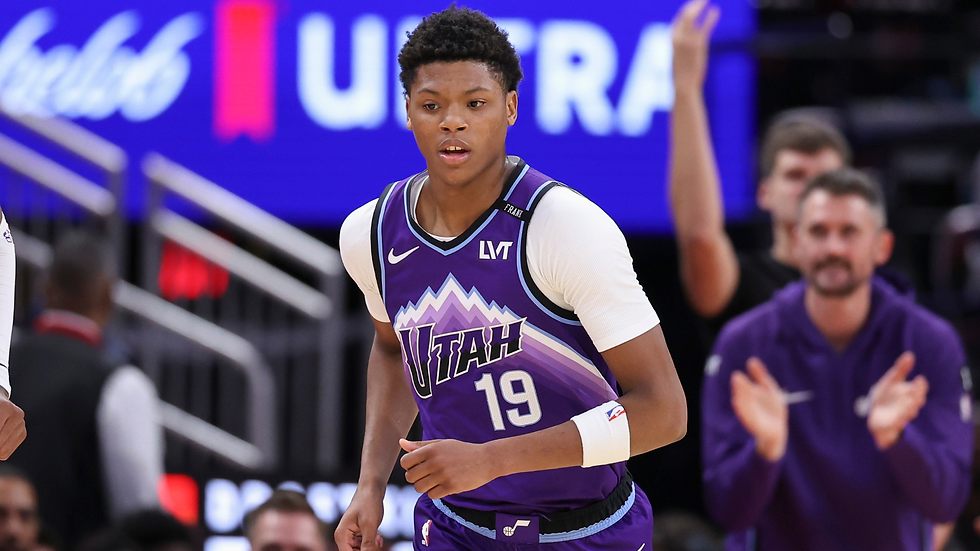
Ace Bailey (UTA) — B-
2025-26 Stats:
10.4 PPG - 3.3 RPG - 1.5 APG
43.8 FG%
Bailey didn’t burst onto the scene the way many expected, but his trajectory over the last month has justified a positive early grade. After a quiet and largely invisible start to his NBA career, Bailey has steadily worked his way into a meaningful role and, more importantly, earned it. He’s been the Utah Jazz’s primary starting forward for over a month now, a testament to both his resilience and growth. At 6’9”, Bailey’s quick, high-release jumper allows him to shoot over virtually anyone, and his defensive motor has helped keep Utah competitive during Walker Kessler’s absence. Alongside Keyonte George, Bailey has quietly cemented himself as a key piece of the Jazz’s young core, proving that development, not instant production, often tells the real story.
Tre Johnson (WAS) — B

2025-26 Stats:
11.6 PPG - 3.0 RPG - 1.6 APG
44.1 FG%
Despite operating under a minutes restriction, Johnson has been a genuine spark plug off the bench for the Washington Wizards. A trigger-happy catch-and-shoot guard with full confidence to let it fly, he’s given Washington’s second unit a much-needed offensive jolt and spacing element. While the Wizards remain near the bottom of the league overall, their recent draft selections have consistently injected life into a rebuilding roster—and Johnson is no exception. Defense remains the swing skill, as he can be targeted on that end, but he’s a rookie still finding his footing. With time, added strength, and experience, that side of his game should catch up. For now, his offensive value alone makes this a solid return on the pick.
Jeremiah Fears (NOP) — A-

2025-26 Stats:
14.8 PPG - 3.6 RPG - 3.1 APG
43.6 FG%
With Dejounte Murray sidelined, Fears has seized the opportunity and, despite being one of the youngest players in the draft, has been electric as a primary ball handler and downhill finisher for the New Orleans Pelicans. While the jumper remains a work in progress, his ability to get to his spots, collapse defenses, and generate offense has been impressive—and the speed at which his scoring translated from Oklahoma to the NBA level has been a pleasant surprise. At the time of the pick, Fears felt like a near-perfect fit for New Orleans’ needs, injecting pace and creation into the lineup. The lingering question is role clarity: once Murray returns, how the Pelicans balance their backcourt will determine just how high Fears’ impact can climb.
Egor Demin (BKN) — B-

2025-26 Stats:
9.3 PPG - 3.1 RPG - 3.4 APG
39.0 FG%
A 6’9” point-forward and former BYU standout, Demin arrived as part of a record-setting rookie influx for the Brooklyn Nets, and it hasn’t taken long to see why he stands out from the group. His size allows him to finish over smaller guards in the paint, and his vision—seeing cleanly over the backcourt—makes him a natural facilitator who consistently finds the extra pass. The efficiency hasn’t fully caught up yet. Demin takes a high volume of threes at a middling percentage, and his overall field-goal mark sits below 40 percent. But given his 24 minutes per night and responsibility as a primary creator, those growing pains are expected for a rookie adjusting to NBA defenses. Brooklyn’s record reflects a young, incomplete roster rather than Demin’s impact. If anything, his play reinforces that the Nets are building this the right way—it starts with the draft, and Demin looks like a foundational piece worth the patience.
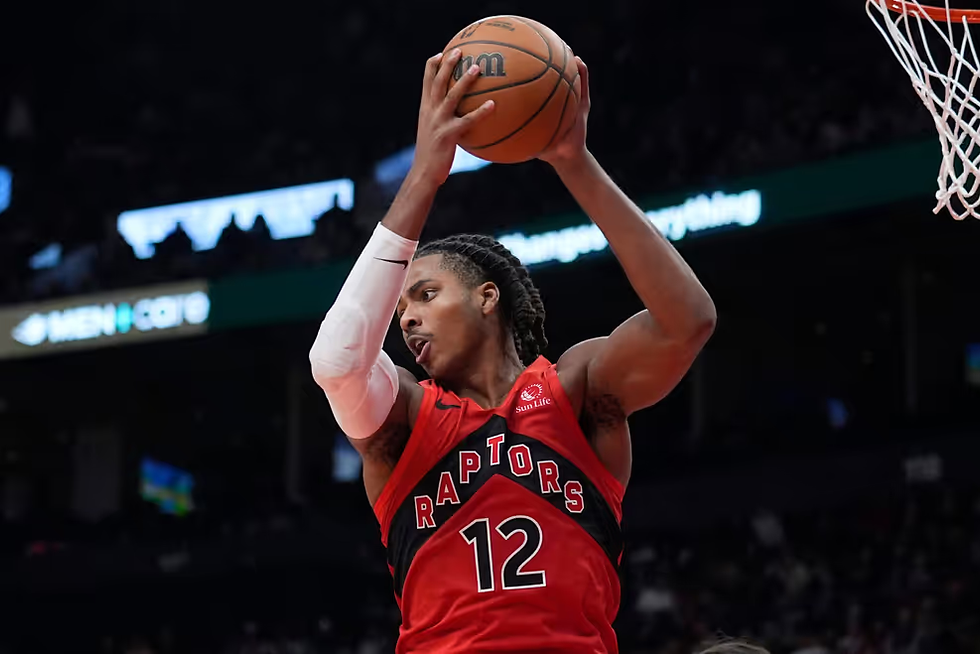
Collin Murray-Boyles (TOR) — C
2025-26 Stats:
7.0 PPG - 3.8 RPG - 1.4 APG
55.6 FG%
A star at the University of South Carolina, Murray-Boyles has yet to fully translate that dominance to the NBA level. With a similar physical profile to his teammate Scottie Barnes, questions about long-term fit were always going to surface—and early returns haven’t quieted them. Murray-Boyles was projected to score and facilitate the way he did for the Gamecocks, but so far his impact has been far more limited: primarily interior scoring, rebounding, and little creation beyond that. The efficiency is undeniable—shooting 55 percent from the field—but the low volume tempers how much that number truly moves the needle. There’s a developmental path here, and the tools suggest he could eventually grow into a Julius Randle-type player, but at the moment, the role and ceiling remain more theoretical than realized.
Khaman Maluach (PHX) — D

2025-26 Stats:
1.5 PPG - 1.0 RPG - 0.2 APG
37.5 FG%
With Mark Williams firmly entrenched as the Phoenix Suns’ primary big, Maluach has barely seen the floor—appearing in just 13 games, averaging five minutes and one point per night. A 7’2” interior presence with a budding jumper, Maluach’s NCAA dominance was always going to require patience at the NBA level, but the issue here is opportunity. Phoenix has clearly prioritized Williams and Oso Ighodaro, leaving Maluach in developmental limbo. And while center is notoriously a slow-burn position, that context doesn’t excuse the return relative to draft capital. For an eighth overall pick, the lack of impact—projected or otherwise—makes this a tough sell. Long-term patience may be required, but in the present, this is a miss for the Suns.
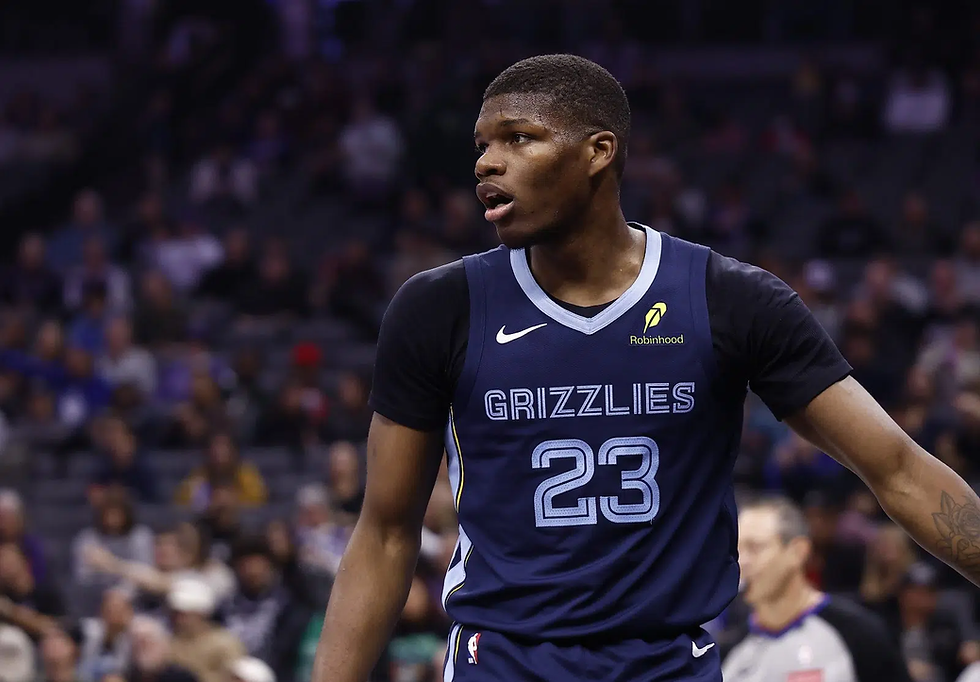
Cedric Coward (MEM) — B+
2025-26 Stats:
13.5 PPG - 6.2 RPG - 2.9 APG
46.6 FG%
Coward has looked like an immediate star, and it’s easy to see why. When the Memphis Grizzlies need instant offense, Coward delivers. He entered the league as an NBA-ready shooter, and despite being slightly undersized at the small forward spot, his switchability, off-ball cutting, and perimeter scoring give him real lineup flexibility. That versatility alone has earned him consistent minutes. Even more impressive, Coward currently sits fifth among rookies in total points scored this season despite logging less playing time than nearly everyone ahead of him. For a team that moved on from Ziaire Williams last year, this selection looks savvy—an efficient, ready-made contributor who fits Memphis’ needs without overcomplicating his role.
Noa Essengue (CHI) — F

2025-26 Stats:
0.0 PPG - 0.0 RPG - 0.0 APG
-.- FG%
Unfortunately, Essengue’s rookie season will be remembered more for circumstance than contribution. After drawing early attention for being on the wrong end of a dominant Summer League poster, expectations remained that the French forward could still carve out a role for the Chicago Bulls. At 6’8” with unusual mobility, length, and a high-level feel for the game, the tools were evident—but they never materialized on the floor. Essengue logged just six total minutes all season before being ruled out indefinitely due to shoulder surgery, finishing his year recording a single steal. While Chicago has performed better than expected overall, the draft offered them no help here. Injuries happen, but in the context of immediate value, this selection simply failed to deliver.
Derik Queen (NOP) — A

2025-26 Stats:
13.5 PPG - 7.0 RPG - 4.0 APG
50.9 FG%
At 6’9” with a powerful 250-pound frame, Queen brings a unique interior presence that’s translated immediately. A true post scorer, he can bully his way to the rim, shrug off contact, or calmly rise into a soft midrange jumper when defenses sag. While the three-point shot isn’t a major part of his arsenal yet, it hasn’t mattered—Queen has been relentlessly productive without it. He currently ranks fourth among rookies in total points scored this season and has emerged as the perfect frontcourt complement to Jeremiah Fears. The New Orleans Pelicans quietly struck gold this summer, landing two players who have outperformed much of the existing roster. Drafting two First-Team All-Rookie–caliber contributors in the same class is rare—and New Orleans may have pulled off exactly that.
Carter Bryant (SAS) — D

2025-26 Stats:
2.4 PPG - 1.7 RPG - 0.2 APG
35.6 FG%
Once touted back in 2022 as the top small forward in the 2025 draft class, Bryant’s NBA reality has fallen well short of those early projections. Despite a solid collegiate stint at University of Arizona and the capability to become something more, the fit—and usage—simply hasn’t clicked with the San Antonio Spurs. Bryant is averaging just seven minutes off the bench and two points per game, production that pales in comparison to several second-round rookies who are already carving out meaningful roles elsewhere. The frustrating part is the profile: at 6’8” with explosive athleticism and textbook shooting mechanics, Bryant looks like a wing you’d design in a lab. The determination is there, but the opportunity isn’t. Players like this need extended run to fail, adjust, and grow—not cameo appearances. Until that happens, the promise remains theoretical, and for now, the impact simply hasn’t arrived.
Ultimately, these grades reflect almost premature—far from a final verdict. Two months into their NBA careers, we’re evaluating what these lottery picks are right now: how they’ve translated early, how they fit within their team’s ecosystem, and how justifiable their selection looks in the present. Development in the NBA is rarely linear, and the true arc of these players’ careers will be defined over the course of years, not weeks. Some will rise, others will stumble, but these kids have an open stage to kick up these grades. For now, this is an early temp check—because the story is only just beginning.

This NBA season has been everything but predictable 🚨 Can't keep up? Stay tuned to Sportz Nation so you don't miss a second of the action.
Thanks for reading!
-Joel Piton
(@jpiton7)


Comments