
Ranking Every 6th Man of the Year Since 2000


The NBA’s Sixth Man of the Year award celebrates a unique kind of star—usually a guy who's underrated but changes the course of games without hearing their name in the starting lineup. Some award winners were instant offense, and others became foundational pieces on championship contenders, proving that impact isn’t limited to the staring lineup. But not every Sixth Man carried the same impact.
Some winners put up buckets on average teams, while others helped define an era or elevate mediocre squads into legitimate title contenders. Statistics tell part of the story, but context matters too. With that being said, let's look back at all the Sixth Man of the Year winners this century and order them from least impactful to most impactful, weighing both individual production and the influence each player had on their team and the league.
Mike Miller (2006)
Memphis Grizzlies

2005-06 Stats:
13.7 PPG · 5.4 RPG · 2.7 APG · 46.6% FG
While he doesn't have the high-octane scoring volume of a Jamal Crawford or Lou Williams, Miller’s 2005-06 campaign was a clinic in sharpshooting. He wasn't just a shooter though; at 6’8”, he was an oversized playmaker who could rebound and initiate the break. But, of course, his 40.7% from three-point range provided the spacing that Pau Gasol needed to dominate the post. He helped the Grizzlies secure 49 wins by acting as the glue that kept the second unit more productive than many teams' starting lineups. With this win, Miller became one of the few players in NBA history to own both a Rookie of the Year trophy and a Sixth Man of the Year award in a rather unique career arc.
Bobby Jackson (2003)
Sacramento Kings

2002-03 Stats:
15.2 PPG · 3.7 RPG · 3.1 APG · 46.4% FG
It's incredibly difficult to take a Sixth Man of the Year selection seriously when the player started nearly half of his games. During the 2002-03 campaign, Jackson played in only 59 games and started 26 of them (roughly 44%) while filling in for an injured Mike Bibby. That being said, when looking at his raw production, his effectiveness was undeniable. He brought a frantic, chaotic energy to a legendary 59-win Kings team that operated as one of the most aesthetically pleasing offenses in NBA history. He posted career highs in points, field goal percentage, and three-point shooting in his best season by far. For a guy who was mostly seen as "Mike Bibby's Shadow" in the early 2000's, Jackson went out of his way to prove he was an elite player too. Still, compared to the other names on this list, his Sixth Man selection was more forgettable.
Corliss Williamson (2002)
Detroit Pistons

2001-02 Stats:
13.6 PPG · 4.1 RPG · 1.2 APG · 51.0% FG
Coming into the year, most basketball experts predicted Detroit would completely miss the playoffs. Instead, under first-year head coach Rick Carlisle, they ground out 50 wins and captured their first Central Division title since 1990—and Williamson helped make it possible. "Big Nasty" wasn't your typical perimeter-oriented sixth man. He was a bruising, physically imposing forward who played with incredible strength. He could post up like a power-forward or glide to the rim and finish with the agility of a small-forward, putting up 13 points a night on 51% from the field without shooting threes. Williamson embraced this blue-collar role and helped set the tempo for a title just a few years later.
Naz Reid (2024)
Minnesota Timberwolves

2023-24 Stats:
13.5 PPG · 5.2 RPG · 1.3 APG · 47.7% FG
Naz's impact went way past the traditional box score. As the first player in Minnesota Timberwolves history to win the award, Reid became the ultimate "X-factor" for a team that spent most of the season fighting for the top seed in a brutal Western Conference. The former Jelly Fam standout was a sniper. Shooting 41.4% from three on five attempts per game forced opposing centers out of the paint, creating massive lanes for Anthony Edwards to attack. This made Minnesota a very powerful offensive team, despite the youth. Reid is only the third undrafted player in NBA history to win the award. His journey from a two-way contract to a Sixth Man of the Year winner makes him a massive fan favorite—to the point where the name "Naz Reid" has become a literal mantra in Minnesota.
Lou Williams (2015)
Toronto Raptors

2014-15 Stats:
15.5 PPG · 1.9 RPG · 2.1 APG · 40.4% FG
Williams was pretty much exactly what Toronto needed. Following a first round loss to a veteran Nets team the year before, it was clear this team needed points, and Terrence Ross (9 points per game) wasn't cutting it. Insert Lou Williams, who immediately became the ultimate relief valve for Kyle Lowry and DeMar DeRozan. While his efficiency wasn't at the level of his later years, his impact on the Raptors' culture and win column was undeniable. He became the first player in Raptors history to win Sixth Man of the Year, leading the "6 God" himself, Drake, to immortalize his impact with the song "6 Man". He was a major factor on offense and helped the Raptors secure 49 wins that season.
Payton Pritchard (2025)
Boston Celtics

2024-25 Stats:
14.3 PPG · 3.8 RPG · 3.5 APG · 47.2% FG
After playing a vital role in the Celtics' 2024 title run, he didn't just maintain his level; he used that championship confidence to explode into the most dangerous reserve shooter in the league. It was no secret that this kid could shoot from half-court. But the efficiency climbed and so did the volume this particular season. He set a new NBA record for three-pointers made by a reserve (246), shooting an elite 40.7% from deep. His ability to hit logo shots and transition threes became the Celtics' secret weapon for maintaining huge leads. He led all NBA reserves in total points (1,079) for the 2024-25 season and went from being a scrappy energy guy to a legitimate floor general with career highs in points, rebounds and assists.
Aaron McKie (2001)
Philadelphia 76ers

2000-01 Stats:
11.6 PPG · 4.1 RPG · 5.0 APG · 47.3% FG
Aaron McKie was a player who's value is likely underrated by fans. Allen Iverson was the league MVP and a scoring hurricane, but he needed someone to actually organize the offense so he could focus on hunting shots. McKie’s 5.0 assists per game—a massive number for a bench player in that era—provided the playmaking that kept the Sixers' offense from becoming too predictable. In a era where bench triple-doubles were almost unheard of, McKie recorded two of them during this season. McKie was also one of the first over-sized point guards, which were harder to come by. He was big enough to guard three positions (PG, SG, SF), allowing the Sixers to hide Iverson on the weakest offensive threat. McKie helped the Sixers reach the NBA Finals with a 56-26 record.
Jamal Crawford (2016)
Los Angeles Clippers

2015-16 Stats:
14.2 PPG · 1.8 RPG · 2.3 APG · 40.4% FG
Crawford has stamped his name on this list three times, and this might be the most emotional one. At 36 years old, Crawford became the oldest player ever to win the Sixth Man of the Year award, proving that his offensive back was timeless and one of a kind. This was the season Blake Griffin missed 47 games due to injury and suspension. The Clippers' "Lob City" identity was under siege, and Crawford stepped up as a crafty fan-favorite that made the Clippers fun to tune in to. By winning this award, Crawford became the first player in NBA history to win three Sixth Man of the Year titles. It solidified his legacy as the greatest bench specialist of his generation. The league's best bail-out option, the Clippers secured a 53-29 record.
Malcolm Brogdon (2023)
Boston Celtics

2022-23 Stats:
14.9 PPG · 4.2 RPG · 3.7 APG · 48.4% FG
Brogdon's career was short, but he made a huge impact, and as second-round pick most scouts overlooked entirely. While the sixth-man award had become synonymous with high-volume, low-efficiency shooters, Brogdon won it by being the league’s most efficient connector. He joined a Celtics team that had just reached the Finals and provided the one thing they were missing: a veteran who could lead the second unit without a drop-off in IQ or efficiency. Prior to this, Brogdon was mostly a career starter who had never come off the bench in his life. He checked his ego at the door, shot 44% from three, and helped the Celtics be Division Champions.
Keldon Johnson (2026)
San Antonio Spurs

2025-26 Stats:
13.2 PPG · 5.4 RPG · 1.4 APG · 51.9% FG
You've got to commend the sacrifice here. Just a few years prior, he was a 22-point-per-game bucket getter for the Spurs, but as the roster continues to develop around Victor Wembanyama, Keldon faced a choice: fight for touches or fuel a contender. He chose the latter, embraced his role and helped propel the team to a dominant 62-20 record that we haven't seen since the Kawhi Leonard era. Keldon was the only player in the NBA during the 2025-26 season to play all 82 games without a single start. In an era of load management, Keldon was Mr. Reliable. And during this run, Keldon broke Manu Ginobili’s long-standing franchise record for bench points in a single season, tallying 1,081. By condensing his role, Johnson also shot a career high 52% from the field.
Ben Gordon (2005)
Chicago Bulls

2004-05 Stats:
15.1 PPG · 2.6 RPG · 2.0 APG · 41.1% FG
Ben Gordon’s 2004-05 season holds a completely unique place in NBA history: he is the first and only player ever to win the Sixth Man of the Year award as a rookie. Stepping into the league with the ultimate green light, Gordon proved age was just a number and made an immediate impact for a playoff team on day one. The runner-up for Rookie of the Year, Gordon was an electrifying shot maker who helped the Bulls make their first playoff series since Jordan's final three-peat year in 1998—let that sink in. Despite coming off the bench, Gordon played heavy fourth-quarter minutes and famously led the NBA in double-digit fourth-quarter scoring games that season (21 times). When the game was on the line, the rookie was the number one option. Because of that, you could argue he should be higher on this list.
Eric Gordon (2017)
Houston Rockets

2016-17 Stats:
16.2 PPG · 2.7 RPG · 2.5 APG · 40.6% FG
Eric Gordon has a pretty interesting success story as someone who beat the odds and conquered his injuries. A 20+ point per game nightmare sharpshooter in Los Angeles, Gordon overcame knee surgery and maximized the deadliest weapon in his arsenal—his shooting. He became the ultimate green-light shooter off the bench as the perfect complimentary scorer to James Harden. Gordon attempted nearly nine three-pointers a game and his deep range forced defenses to stretch past the breaking point, severely punishing any team that dared to double-team Harden. He also won the All-Star Weekend 3-Point Contest that year which basically cemented his status as the league's premier three point specialist of that season.
Montrezl Harrell (2020)
Los Angeles Clippers

2019-20 Stats:
18.6 PPG · 7.1 RPG · 1.7 APG · 58.0% FG
It's pretty unreal that Montrezl's career didn't last longer. His 2019-20 campaign broke the mold for the modern Sixth Man of the Year. In an era almost exclusively dominated by perimeter-scoring guards, Harrell became the first frontcourt player to win the award since Lamar Odom in 2011, and the only other big apart from Naz Reid to win since. In an odd twist, Harrell did his damage in the paint. He shot nearly 60% from the field and tied for the league lead in 30-point games off the bench that year and led the NBA in bench double-doubles. Harrell’s ability to catch in traffic, finish through contact, and clean up the glass gave the Clippers an unstoppable secondary attack when the starters rested. And by winning the award, he kept the tradition going in Los Angeles next to Lou Will and Jamal Crawford.
Jordan Clarkson (2021)
Utah Jazz

2020-21 Stats:
18.4 PPG · 4.0 RPG · 2.5 APG · 42.5% FG
During the 2020-21 season, the Utah Jazz captured the best regular-season record in the NBA, and Jordan Clarkson was a firecracker off the bench. He was the ideal backup for Donovan Mitchell. When Mitchell sat, Clarkson didn't takeover the offensive responsibilities—he was the offense, launching threes and attacking the rim with absolute zero hesitation. While his 42.5% shooting from the floor isn't going to blow anyone away, his sheer volume (18.4 PPG in just 26.7 minutes) is what broke opposing benches. He was a human flamethrower who could swing the momentum of games in minutes. The dude completely bought into his role as a sparkplug.
Antawn Jamison (2004)
Dallas Mavericks

2003-04 Stats:
14.8 PPG · 6.3 RPG · 0.9 APG · 53.5% FG
Most players enter the 6th Man conversation while they're climbing a career ladder. Jamison entered it by sacrificing and stepping down from stardom in Golden State to fix a roster imbalance, which is the ultimate move. Coming off a season where he averaged 22.2 points as the young, franchise prospect for the Warriors, he moved to Dallas and accepted a bench role to accommodate a frontcourt featuring Dirk Nowitzki and Antoine Walker. He didn’t just accept it—he thrived in it, providing the Mavericks with a starting-caliber punch that decimated opposing benches. He jumped from 47% the previous year to a career-high 53.5% FG and having a guy who could drop 20+ on any given night coming off the pine gave the Mavs way too much firepower. This one the NBA's most phenomenal one and done season campaigns.
Jamal Crawford (2010)
Atlanta Hawks

2009-10 Stats:
18.0 PPG · 2.5 RPG · 3.0 APG · 44.9% FG
Before this season, Jamal Crawford peaked as a primary scorer for a young New York squad. However, that team won just 23 games. Crawford saw an opportunity with the Hawks to be a winner and that's who he was from day one. After spending years as a starter, Crawford transitioned to the bench for a 53-win Hawks team and immediately became one of the most feared late-game options in the league. While Crawford was known for "tough" shots, 2010 was actually his most efficient shooting season of his three Sixth Man of the Year campaigns. His 44.9% from the floor was a career-high to that point. Overall, this move basically rebranded Jamal. He went from just another flashy guard on a losing team to a winner.
Tyler Herro (2022)
Miami Heat

2021-22 Stats:
20.7 PPG · 5.0 RPG · 4.0 APG · 44.7% FG
The "Boy Wonder" had already established himself as a rising star capable of getting a bucket at any given moment, but Herro's 2021-22 is what forced Coach Spo to start him. The second unit wasn't for him, but he sure as hell could thrive in it. Herro didn’t just play a role off the bench; he was a leading scorer for the number one seed in the Eastern Conference. At just 22 years old, he became only the fifth player in NBA history to average 20+ points off the bench for a full season. This was also the season where Herro grew into an established three-level scorer. He was Miami's official late-game clutch shot maker and he also shot 40% from beyond the arc in his most efficient season to date.
Lou Williams (2019)
Los Angeles Clippers

2018-19 Stats:
20.0 PPG · 3.0 RPG · 5.4 APG · 42.5% FG
Back-to-back awards are rare for a reason—it’s incredibly hard to maintain that "surprise" factor once every scouting report in the league is focused on stopping you. But somehow, Lou Williams found ways to score regardless of the defense. In 2019, Lou Williams became the all-time leading bench scorer in NBA history, a pretty absurd milestone. This Clippers team was famously "starless," yet they pushed the powerhouse Golden State Warriors to six games in the playoffs. He and Montrezl Harrell developed the most lethal pick-and-roll partnership in the league, allowing Lou to put up a career high five dimes a night. This was truthfully the season that cemented Williams as one of history's best second unit bucket-getters.
J.R. Smith (2013)
New York Knicks

2012-13 Stats:
18.1 PPG · 5.3 RPG · 2.7 APG · 42.2% FG
After his legendary stint in the CBA during the lockout, J.R. returned to the Knicks and finally channeled his immense talent into winning basketball. In 2013, he was the primary reason the Knicks were able to secure the 2nd seed in the East and their first division title in nearly two decades. J.R. was more than a shooter too. He pulled in five boards a night, could find the open man and showed elevated positioning on defense. In Late March, he became the first player in over 20 years to post three straight 30-point games off the bench. He turned Madison Square Garden into a theater every single night, and his ability to take over a game single-handedly made him one of the most dangerous weapons in the league that year.
Leandro Barbosa (2007)
Phoenix Suns

2006-07 Stats:
18.1 PPG · 2.7 RPG · 4.0 APG · 47.6% FG
The "Brazilian Blur" was the personification of his team's identity. The 2006-07 Phoenix Suns infamously utilized Mike D’Antoni’s "Seven Seconds or Less" offense, and Barbosa was the nitro-boost that ensured point would be scored, even when Steve Nash and Amar'e went to the bench. To average over 18 points while shooting better than 43% from three is elite for a starter, let alone a reserve. And he wasn't shy about driving to the cup either. If they sagged off to stop his drive, he burned them from deep. If they pressed up, he was at the rim before they could turn their heads. Barbosa was the ultimate floor-spacer and secondary creator for a 61-win juggernaut, and somehow, I still think this season from him is slept on.
Jamal Crawford (2014)
Los Angeles Clippers
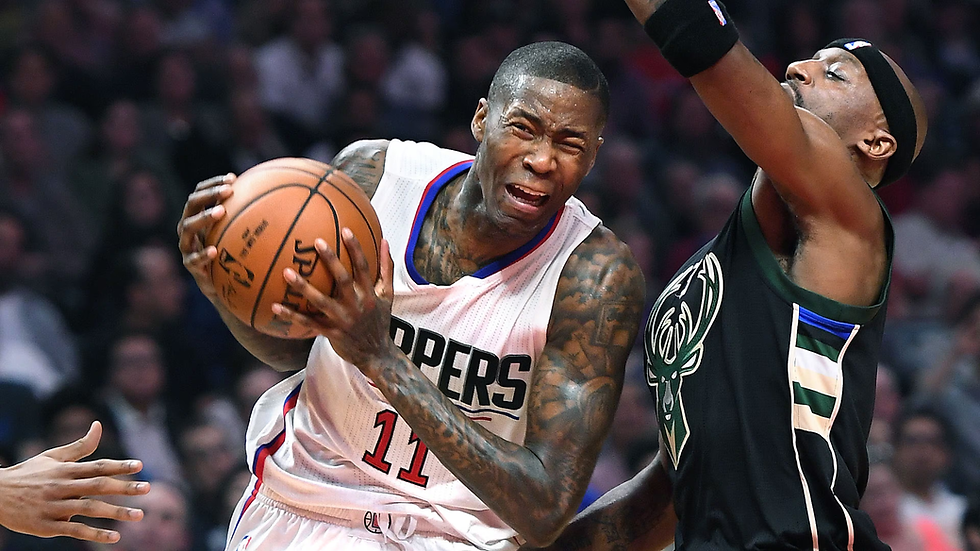
2013-14 Stats:
18.6 PPG · 2.3 RPG · 3.2 APG · 41.6% FG
Crawford won the award three times, but this specific year with the "Lob City" Clippers was too much fun to watch. At 33 years old, he had a level of ball-handling wizardry and perimeter shot-making that made the Clippers' second unit one of the most feared in the league. With Chris Paul and J.J. Redick missing time due to injury, Crawford slid into the starting lineup or took over primary playmaking duties without the team losing any offensive momentum. He put up 18.6 points per game on a 57-win team (a franchise record at the time). While his field goal percentage might look low, he was getting double-teamed from nearly half-court.
Lamar Odom (2011)
Los Angeles Lakers

2010-11 Stats:
14.4 PPG · 8.7 RPG · 3.0 APG · 53.0% FG
While the Lakers’ quest for a three-peat ultimately fell short against the Mavericks, Odom’s individual campaign was a masterclass in efficiency. In 2011, Odom was the ultimate Swiss Army Knife for Phil Jackson’s triangle offense. At 6'10", he possessed the handle and vision of a point guard, the shooting touch of a wing, and the rebounding tenacity of a center. This specific season saw him post a career-high 53.0% from the field and a blistering 38.2% from three. He wasn't just coming off the bench to score; he was coming in to stabilize whatever the Lakers lacked at that particular moment. The guy was too tall to contest, and too strong to get easy buckets over. Odom played all 82 games that year and held a veteran squad together.
Lou Williams (2018)
Los Angeles Clippers

2017-18 Stats:
22.6 PPG · 2.5 RPG · 5.3 APG · 43.5% FG
Lou Williams is the definition of a microwave scorer. He wasn’t just a bench player getting hot for a few weeks; this was a 31-year-old veteran carrying a franchise on his back literally immediately after the Lob City era had finished up. With Chris Paul gone and Blake Griffin traded mid-season, Lou Will became the Clippers' primary offensive engine, leading the team in both scoring and assists. His 22.6 points per game remains one of the highest scoring averages for any Sixth Man of the Year winner in NBA history. His campaign was highlighted by a 50-point explosion against the Golden State Warriors, where he dropped 27 points in a single quarter. Most of us would argue he was an All-Star snub this year.
Jason Terry (2009)
Dallas Mavericks

2008-09 Stats:
19.6 PPG · 2.4 RPG · 3.4 APG · 46.3% FG
In 2009, a 32 year old Jason Terry was the undisputed second option on a 50-win Mavericks team, playing nearly 34 minutes a night. A pure shooter, Terry's impact was defined by his clutch gene and this guy dominated in the fourth quarter. If the Clutch Player of the Year Award was around back then, he'd be a perennial favorite. With a lightning quick release from beyond the arc coming off the bench, Terry ensured that Dallas never had a scoring drought, bridging the first and second units together to form one of the best offensive teams in the league. I'm putting Terry this high because of the burden of responsibility he carried. He forced defenses to stay glued to him, which opened the floor for Dirk.
James Harden (2012)
Oklahoma City Thunder

2011-12 Stats:
16.8 PPG · 4.1 RPG · 3.7 APG · 49.1% FG
Before "The Beard" became a heliocentric MVP and a perennial scoring champion in Houston, he was the ultimate connective tissue for a young, Finals-bound Thunder squad. Russell Westbrook provided the force. KD provided the scoring. And Harden was the cerebral playmaker who made the puzzle fit together. At just 22 years old, he ran the second unit, averaging nearly 17 points on just 10.1 field goal attempts per game which is absurd. When games were on the line, head coach Scott Brooks trusted Harden to act as the primary ball-handler, which allowed Westbrook to attack as an off-ball cutter and gave Durant cleaner looks. It didn't really surprise many when Harden immediately took off with flying wings as a first-option in Houston.
Manu Ginobili (2008)
San Antonio Spurs

2007-08 Stats:
19.5 PPG · 4.8 RPG · 4.5 APG · 46.0% FG
This is a no-brainer. Manu is the only player on this list who used the Sixth Man role to assemble a legitimate MVP-caliber resume. In the 2007-08 season, Ginobili wasn't just the best bench player in the league; he was arguably a top-ten player in the world, earning an All-NBA Third Team selection despite starting only 23 of his 74 games. He was Gregg Popovich’s ultimate tactical weapon. The defense, the smooth Euro-step, the playmaking: Ginobili was the undisputed closer for a perennial championship contender. He was a highly effective defender and could manipulate pick-and-roll coverages in his sleep. If the Sixth Man of the Year award is measured by who had the highest ceiling of pure basketball impact, Ginobili is the undisputed gold standard.
_ _ _ _ _ _ _ _ _ _ _ _ _
This was no easy task. Some players had bigger roles than what we can see on paper, and others became closing-lineup weapons, and a few were perfect role players on elite teams. But impact can be judged in different ways...
So did we get the ranking right? Who should be higher, who should be lower, and which Sixth Man winner deserves more respect? Let us know in the comments below!

The second round of the NBA playoffs have kicked off 🚨 Can't keep up with the drama? Be sure to stay tuned into Sportz Nation for your sports updates on all things basketball.
Thanks for reading!
-Joel Piton
(@jpiton7)

Comments