
Ranking EVERY NBA Finals MVP Since 2000

Sportz Nation - 6/9/2026
The NBA Finals are officially here. Legacies are about to get stamped, and some of the league's brightest stars are ready to either make history or fold underneath the brightest lights. With the Knicks and Spurs giving us a Finals matchup that has everyone talking, it only feels right to look back at the players who owned this stage before them. Since 2000, we’ve seen everything. Stars carrying franchises on their backs. Underdog runs that felt ripped straight out of a movie. Legendary performances from names like Dirk Nowitzki, LeBron, Kobe and more. But we’ve also seen Finals MVP winners who sparked debate for getting the title.
So today, we’re ranking every Finals MVP since 2000. Not just by box score numbers, but by impact, difficulty, competition, context, and how crucial the player was. Maybe some don't hold up quite as strongly as history remembers.
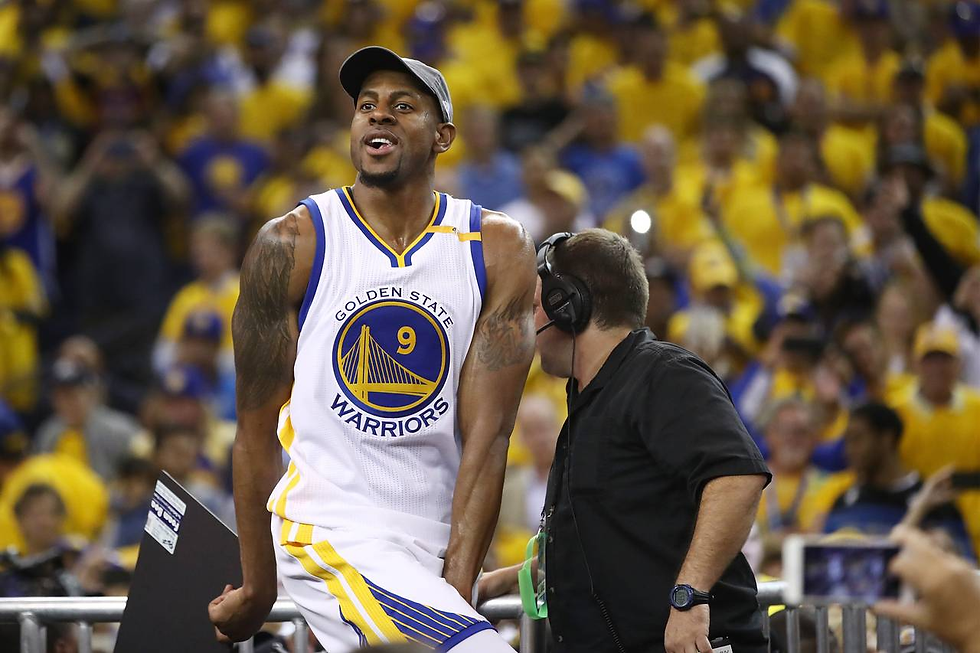
Andre Iguodala (2015)
Golden State Warriors

Playoff Finish: 4-2 (CLE)
Finals Stats: 16.3 PPG · 5.8 RPG · 4.0 APG · 52.1% FG
This isn't a knock putting him last. It's just reality. Every other player on this list was a focal point in the scouting report. Iguodala was left open by design. The 16 points and 4 dimes a game won't jump out at you though, so how did he get the award? It's quite simple—Iguodala made the best player on the planet's life HELL. His defense against LeBron was phenomenal in the Finals and he forced him to settle for deep jumpers and stripped him cleanly when he'd go for the drive. However, looking at the entire pantheon of MVPs, his offensive production was entirely a byproduct of Stephen Curry’s playmaking and the nonchalant defense. Still, a guy in his thirties made his impact heavily felt on both sides of the ball and it deserves props.
Kawhi Leonard (2014)
San Antonio Spurs

Playoff Finish: 4-1 (MIA)
Finals Stats: 17.8 PPG · 6.4 RPG · 2.0 APG · 61.2% FG
Yet another defensive minded wing who clinched the hardware primarily for his assignment on LeBron James. Back in the 2013-14 season, a 22-year-old Kawhi Leonard went from a role-player to one of the best lockdowns in basketball and a potential star. But he was more than just defense. Playing with the likes of Tim Duncan, Tony Parker and Manu Ginobili, the Spurs were basketball Nirvana. The ball moved faster than any defense could rotate, and there was no singular offensive weapon which makes Kawhi's 18 points a night in the Finals that much more impressive. After scoring just 9 points in both Games 1 and 2, Kawhi erupted for 29 points in Game 3, 20 points in Game 4, and 22 points in Game 5 on ridiculous shooting splits. This is still more of an ensemble award though.
Jaylen Brown (2024)
Boston Celtics

Playoff Finish: 4-1 (DAL)
Finals Stats: 20.8 PPG · 5.4 RPG · 5.0 APG · 44.0% FG
Looking at the sheer depth and skill of that Boston squad, this is insane nod for a second option. A two-way monster throughout the Finals, Brown picked up Luka Doncic at full-court, hounded him for 94 feet, and made the Mavericks single greatest offensive weapon invisible at times. With the likes of Jrue Holiday and Derrick White on the backcourt, Jaylen Brown made the greatest defensive impact. He also notched around 21 points a night, which looks pretty modest at first glance for a Finals MVP. But the context matters. Jayson Tatum was pressured by Dallas' defensive non stop which made his scoring vital—to have another 20+ ppg guy on the squad capitalizing off of a lack of attention makes for a serious weapon. The playmaking might be the most underrated part as well.
Chauncey Billups (2004)
Detroit Pistons

Playoff Finish: 4-1 (LAL)
Finals Stats: 21.0 PPG · 3.2 RPG · 5.2 APG · 50.9% FG
The Pistons had several All-Stars and were defensive dogs, and Billups was the brains of the operation. A Lakers team featuring Shaq, Kobe, and two first ballot Hall of Famers (Karl Malone and Gary Payton) looking to clinch their first title were the clear favorites going into this matchup. Instead, Billups physically and tactically bullied Payton and shook the confidence of the entire LA roster. The ball control was unreal here, and he dropped 5 dimes a night with very few mistakes. But the shooting splits are what stand out to me. Chauncey averaged 21 points on 51% from the field, 47% from three and 92% from the free-throw line, securing the nickname "Mr. Big Shot". You could argue he could go higher, but due to sheer volume of stars on this team and the defensive played by the Wallaces, it's safe to say he had serious help.
Tony Parker (2007)
San Antonio Spurs

Playoff Finish: 4-0 (CLE)
Finals Stats: 24.5 PPG · 5.0 RPG · 3.3 APG · 56.8% FG
Everyone thought the Finals MVP had Tim Duncan's name pre-written, but instead, a 25 year old Tony Parker laced up and embarrassed Cleveland's backcourt. The Cavs' singular plan going into the finals was simple—don't let Duncan score in the post. They packed the paint with big bodies Zydrunas Ilgauskas and Varejao, and Tony Parker took this as a personal challenge. He forced his way to the rim for lays and looked like an expert in the tear drop. Cleveland's perimeter defenders, which included heavy hitters like Eric Snow, were somehow far too slow to stay in front of Tony's blinding quick first-step. He averaged an 24 points through the series on an absurd 57% from the field, looking like the clear cut star of the squad until the job was done. He became the first European-born player to win Finals MVP.
Paul Pierce (2008)
Boston Celtics

Playoff Finish: 4-2 (LAL)
Finals Stats: 21.8 PPG · 4.5 RPG · 6.3 APG · 43.2% FG
This team was loaded with talent but the team belonged to The Truth. And you can't talk about the 2008 Finals without starting with the "Wheelchair Game". Midway through the third quarter, the guy gets carried off the court, only to come back minutes later and hit back to back threes. He also went toe to toe with the ultimate apex predator in Kobe Bryant throughout this series, and although a terrifying task, Pierce leaned into to it and embraced the assignment. Pierce matched Kobe shot for shot at moments, but what stands out to me is the passing. Pierce averaged three assists per game for his career so to average 6 in the Finals is pretty elite. He picked apart the Lakers defense not just as an isolation scorer but as a true playmaker.
Tim Duncan (2005)
San Antonio Spurs

Playoff Finish: 4-3 (DET)
Finals Stats: 20.6 PPG · 14.1 RPG · 2.1 APG · 41.9% FG
Timmy's 41% from the field looks like a disaster for a superstar big man who made his living in the low post. But context is very important here. Duncan was going to war on every single possession against the toughest frontcourt in NBA history, a four-time Defensive Player of the year in Ben Wallace, and Rasheed Wallace. The Pistons through relentless double-teams at him all series long and he took a SERIOUS beating over the course of the seven games. Many argue that the Finals MVP crown was Manu's this particular year, but without Duncan, this series would have been over before it began. In Game 7, Duncan broke out in the fourth quarter for 10 crucial points and secured his third title, making him the fourth player in NBA history to win three Finals MVPs.
Kobe Bryant (2010)
Los Angeles Lakers

Playoff Finish: 4-1 (ORL)
Finals Stats: 28.6 PPG · 8.0 RPG · 3.9 APG · 40.5% FG
This is the definition of winning ugly. Kobe wasn't just the best offensive player on the Lakers, he WAS the sole offense. This series was the definition of "give me the ball and let me work". And the Celtics through everything at him. From Paul Pierce, to Ray Allen, and of course Tony Allen, backed up by former DPOY Kevin Garnett at the rim. Boston's game plan was to exhaust Kobe and make him work for every bucket, and this gameplan would have worked against virtually any other player. Kobe never took his foot off the gas, and in Game 7, shot 6-24 from the field in one of the most unpolished, physical finishes in NBA history. The degree of difficulty to pull off a chip this season was ridiculous.kj
Kevin Durant (2018)
Golden State Warriors

Playoff Finish: 4-0 (CLE)
Finals Stats: 28.8 PPG · 10.8 RPG · 7.5 APG · 52.6% FG
This was Golden State in peak form. Virtually the perfect basketball team—this squad had no weaknesses whatsoever and were bound to win another title. Sure, the roster was stacked, but if there was any debate about who the MVP of this series was, KD ended in Game 3 after Stephen Curry laid an egg and went 1-14 from three. KD dropped 43 points, 13 rebounds and 7 assists to put the Dubs up 3-0 against none other than—LeBron. Also, averaging 11 boards and 7 assists a night is absurd for KD and the passing just unlocked another level of fluidity to the Warriors offense. As tough a cover as KD is, even if you manage to get the stop, there are too many guys who can put the ball in the basketball from long-range. Following this title, KD became the sixth player in history to win back-to-back Finals MVPs.
LeBron James (2020)
Los Angeles Lakers

Playoff Finish: 4-2 (MIA)
Finals Stats: 29.8 PPG · 11.8 RPG · 8.5 APG · 59.1% FG
For as much flack as the NBA Bubble gets, we saw a version of LeBron that was unstoppable. At 35 years old, he was the ultimate heavyweight floor general. Playing most of his minutes at point guard, LeBron averaged 8 dimes a night and dictated the tempo of EVERY single possession. Jimmy Butler was no match. Everything Miami did, LeBron neutralized. He manipulated the defense with his vision and fed Anthony Davis when necessary. And the scoring efficiency? Staggering. LeBron put up thirty points a game on 59% from the field, recognizing the Miami lacked the sheer size necessary to stop him from scoring at will. And you can't evaluate this MVP without acknowledging the mental toll the Bubble took on the league, no fans, no home-court advantage. This was pure, isolated skill.
Shai Gilgeous-Alexander (2025)
Oklahoma City Thunder

Playoff Finish: 4-3 (IND)
Finals Stats: 30.3 PPG · 4.6 RPG · 5.6 APG · 44.3% FG
Scoring champion, MVP, and Finals MVP, many of us witness this as one of the single greatest individual campaigns in modern history. But when you look at the execution and leadership from Shai, the performance is even more impressive. A rare throwback who relentlessly exploited the mid-range, Shai put up a steady thirty points per game in an era defined by threes. Going toe to toe with a relentless Indiana squad, Shai thrived in the 10-to-15 foot range, could draw fouls at will and was hitting heavily contested fadeaways at an automatic clip. This title required a bit more luck than others on this list (Haliburton went down in Game 7) but this squad had an unbelievable regular season and playoff run and it all started with Shai.
Kobe Bryant (2009)
Los Angeles Lakers

Playoff Finish: 4-3 (BOS)
Finals Stats: 32.4 PPG · 5.6 RPG · 7.4 APG · 43.0% FG
This was the definitive chapter of Kobe's individual legacy. For years, the narrative surrounding Kobe was that he couldn't win the ultimate prize without Shaq as the undisputed alpha. In '09, he didn't end that narrative, he obliterated it. For a guy that held the NBA record for the most field goals attempted for over a decade, passing is the last thing you expect him to do. Instead, when you look at the raw stats, the assists were the primary game changer in besting the Orlando magic. Anchored by three-time DPOY Dwight Howard, Kobe realized he didn't have to do everything by his lonesome and made the extra pass when needed, and the way he picked apart the defense was maestro-like. Dropping 40 points in the series opener, Kobe broke Orlando's spirit and led the Lakers to a 4-1 win.
Kawhi Leonard (2019)
Toronto Raptors

Playoff Finish: 4-2 (GSW)
Finals Stats: 28.5 PPG · 9.8 RPG · 4.2 APG · 43.4% FG
The "One and Done" mercenary—what Kawhi did in his singular season with Toronto might be impossible to replicate. The guy came to Toronto for one season, led them to the best record in the division, bested the greatest team in basketball and left the next summer. And he didn't just play well; he forced the Warriors to surrender their game plan and completely warp their defensive scheme just to survive the Raptors possessions. He averaged 28, 9 and 4 but that still doesn't capture the gravity of how good he was. He made Kevin Durant's life hell pre-injury, could guard positions 1-5, sprint downhill for fastbreak finishes and could punish you from deep. We were looking at one of the most complete prospects in basketball history, fully evolved from his first Finals MVP and seemingly without weakness.
LeBron James (2013)
Miami Heat

Playoff Finish: 4-3 (SAS)
Finals Stats: 25.3 PPG · 10.9 RPG · 7.0 APG · 44.7% FG
LeBron put together likely the single greatest Game Seven in NBA history. You can't analyze the 2013 Finals without the final act. With the series on the line, LeBron dropped 37 points, 12 rebounds and 4 assists on the Spurs as vengeance for 2007. The Spurs did everything they could to contain him—Kawhi, Duncan, Ginobili: all in vanity. A 260 pound freight train, LeBron was virtually unguardable from inside and out, and was also coming off of his best three point shooting season yet on 40.6%. And the defense he played? Flawless. Every bucket by the Spurs had to be earned. The only reason this isn't ranked higher is because of the help provided by the "Heatless"; this may not have been a lone job, but it's still impressive.
Stephen Curry (2022)
Golden State Warriors

Playoff Finish: 4-2 (BOS)
Finals Stats: 31.2 PPG · 6.0 RPG · 5.0 APG · 48.2% FG
Steph had built up quite the Hall-of-Fame resume, but one piece of hardware was missing. In 2015 the honors went to Iggy. 2017 and 2018—Kevin Durant. A Finals MVP was all that was left and he claimed it against quite possibly the toughest defensive test of his career. The 2022 Celtics were a nightmare matchup defensively—they had just shut down Giannis, Kevin Durant, Jimmy Butler, and had the clear size advantage over a small ball Warriors team. But Steph didn't just survive Boston, he dismantled them. The 34 year old embarrassed Father Time and put up 31 points, 6 boards and 5 dimes against a defensive scheme literally designed to stop small guards. The sole offensive engine, this looked like a lottery team without Steph in the equation.
LeBron James (2012)
Miami Heat

Playoff Finish: 4-1 (OKC)
Finals Stats: 28.6 PPG · 10.2 RPG · 7.4 APG · 47.2% FG
After the 2011 collapse, the pressure was ON LeBron in 2012. Sports fans across the globe were wondering whether or not he could close the deal and win a chip after "the decision", and LeBron didn't just answer the call, he dominated. Facing a young, terrifyingly athletic Thunder team with the NBA's leading scorer Kevin Durant and a young, budding star point-guard in Russell Westbrook, LeBron did everything he could to dismantle them by playing all sides of the ball. He was the primary passer, scorer and rebounder all in one. In Game 5, he clinched the series with 26 points, 11 boards and 13 assists. He was the best player on the floor from start to finish and the best player on the globe. This was his first title and the year he silenced all critics and naysayers once and for all.
Dirk Nowitzki (2011)
Dallas Mavericks

Playoff Finish: 4-2 (MIA)
Finals Stats: 26.0 PPG · 9.7 RPG · 2.0 APG · 41.6% FG
This is hands down the most respected "pure" ring of the modern era, and possibly the toughest one to get on this list. Every other player on this list had at least one other All-Star or All-NBA teammate during their championship run—Dirk did not. He was the sole superstar on a roster full of aging veterans and role players. The final step to victory? Taking down "The Heatles" super team following LeBron's historic decision. And getting to the Finals was no easy feat. Dirk and the Mavericks had to best LaMarcus Aldridge and Brandon Roy in the first round, the reigning champ LA Lakers in the second round, the KD, Russ and Harden tandem in the third, and LeBron in the finals. The one-legged fade, the ability to stretch floor, Dirk refused to waste possessions. This was revenge on Miami for what went down in 2006, it just took 5 years to get it.
Nikola Jokic (2023)
Denver Nuggets

Playoff Finish: 4-1 (MIA)
Finals Stats: 30.2 PPG · 14.0 RPG · 7.2 APG · 58.3% FG
This was when the center position was fully reinvented. Jokic broke the mold of what was possible for a five, and he looked like a top 20 all time great doing it. The Miami heat were complex, Heat Culture was at an all time high, and Jimmy Butler wanted revenge. Unfortunately, Jokic was more than they could have bargained for. Jokic became the first player in NBA history to lead an entire postseason in total, points, rebounds and assists. This has NEVER been done by...anyone. Not Jordan, LeBron, or Wilt, no one. He's also the first and only player to record a 30-20-10 game in the Finals. The playmaking, the fluidity from mid-range, the dominance on the glass—we were witnessing an icon at work. He delivered the first championship in Denver Nuggets history.
Kevin Durant (2017)
Golden State Warriors

Playoff Finish: 4-1 (CLE)
Finals Stats: 35.2 PPG · 8.2 RPG · 5.4 APG · 55.6% FG
Following the move from OKC to the single winningest team in NBA history, fans expected madness to ensue and soon—but no one could have predicted just how seamlessly KD would have blended in with the team. The definitive "apex scorer" of the 2010s, this was utter destruction. The only reason I'm putting this ahead of the likes of Jokic and Dirk is the sheer absurdity of his shooting splits. Averaging 35 points and shooting 55% from the field, 47% from three and 92% from the free throw line is not supposed to happen in the Finals and is quite frankly—completely unfair. By this point, the consensus was out that Kevin Durant was actually a seven-foot (not 6'9") animal who couldn't be contained, not even by the likes of LeBron. The 2017 Cavs were battle tested, made a historic comeback the year prior and still weren't on the same pedestal as Golden State.
Shaquille O'Neal (2001)
Los Angeles Lakers

Playoff Finish: 4-1 (PHI)
Finals Stats: 33.0 PPG · 15.8 RPG · 4.8 APG · 57.3% FG
The middle-child to a threepeat, it's hard to argue that any of these versions of Shaq weren't top five. There was hardly any IQ necessarily when it came to feeding Shaq down-low since he was such a physical force of nature that the best defensive schemes were irrelevant. When we talk about dominance in sports, usually it's hyperbolic. With Shaq, it was literal. The 76ers had the Defensive Player of the Year Dikembe Mutombo, who was arguably the best rim protector of his generation, but Shaq turned him into a middle-schooler, backing him down and finishing over him at will. There was no "stopping" him, only the hope that one of the many times they fouled him would result in missed free throws. The most underrated part of this post season performance? His passing. Phil Jackson embraced the idea that Shaq was more than just a big body, and let him move the ball out of double-teams.
Dwyane Wade (2006)
Miami Heat

Playoff Finish: 4-2 (DAL)
Finals Stats: 34.7 PPG · 7.8 RPG · 3.8 APG · 46.8% FG
This was the greatest individual carry in NBA history (no offense to 34 year old Shaq). Wade took a squad that looked dead in the water, down 0-2, and took them to four straight victories to capture the franchise's first ever title at just 24 years old. And Wade didn't just score, he terrorized the mavericks with a relentless motor, an aggressive downhill drive, and absurd speed, making the nickname "the Flash" a sermon. D-Wade didn't need to shoot threes to be effective. He lived in the paint, daring Josh Howard to stop him, who couldn't. The guy shot 97 free throws over the course of the six games. He was the primary ball-handler, the primary scorer, and the heart of the team's defense all in one.
Giannis Antetokounmpo (2021)
Milwaukee Bucks

Playoff Finish: 4-2 (PHX)
Finals Stats: 35.2 PPG · 13.2 RPG · 5.0 APG · 61.8% FG
Down 0-2 against Phoenix with the door closing quickly, Giannis single-handedly forced this Finals series into another direction. He didn't just play through a hyperextended knee that would sidelined most players for months, he used that same knee to play better defense than everyone else. Giannis did EVERYTHING, patrolled the rim, attacked the paint, and turn the series into a tactical chess match of who's team could go the distance. Why number 6? Because of Game 6. Giannis delivered perhaps the greatest individual Finals closeout in NBA history with 50 points, 14 rebounds and 5 blocks on 17-19 from the free throw line. It was a 48-minute display of destruction, silencing every critic that said he couldn't go far without a jumper.
Shaquille O'Neal (2002)
Los Angeles Lakers

Playoff Finish: 4-0 (NJN)
Finals Stats: 36.3 PPG · 12.3 RPG · 3.8 APG · 59.5% FG
The end of a dynasty, by this point, the league had spent three years trying to find a "Shaq-stopper" and came up short. Facing New Jersey, this was a run that effectively shaped the NBA and made the Lakers a legendary franchise. Averaging 36, 12 and 4, Shaq turned the paint into a "no-fly zone". He shot 60% from the field while being triple-teamed on nearly every position: to no avail for the opponent. The sweep was never in doubt because the Nets had literally no answer for his size. Shaq became only the second player in history—joining "his Airness" Michael Jordan—to win three consecutive Finals MVP awards: not bad company. This threepeat pretty much cemented Shaq as the single most dominant basketball anomaly the game has seen.
Tim Duncan (2003)
San Antonio Spurs

Playoff Finish: 4-2 (NJN)
Finals Stats: 24.2 PPG · 17.0 RPG · 5.3 APG · 49.5% FG
This was tactical and physical basketball supremacy. The 24 points per game won't jump off the page at you, but the guy also averaged 17 rebounds, 5 assists and 5 blocks throughout the series. Duncan didn't just carry the offense; he was the entire defense as well. With so much at stake given this was David Robinson's retirement tour and a ring would be the icing on the cake, Duncan did everything he could, and then some, to make the dream a reality for his veteran. And you can't bring up this series against the Nets without talking about the closeout game, where Duncan dropped 21 points, 29 rebounds, 10 assists and 8 blocks, a near quadruple double to put New Jersey in it's place. His 32 total blocks in that Finals series remains an NBA record. He wasn't just swatting shots, he was erasing an entire teams confidence and identity while doing it.
LeBron James (2016)
Cleveland Cavaliers

Playoff Finish: 4-3 (GSW)
Finals Stats: 29.7 PPG · 11.3 RPG · 8.9 APG · 49.4% FG
This wasn't just the highlight of LeBron's career: it's widely considered the greatest individual achievement in the history of basketball. There are a lot of heavy hitters on this list, for certain, but none carry the same impossible weight, pressure or absurdity as this one. This was a 3-1 comeback against the greatest regular-season team in NBA history—the 73-9 Golden State Warriors. It's not hard to see why this is number two. Across the seven-game series, LeBron led both teams in every single major statistical category—points, rebounds, assists, steals and blocks. This has never been done before and will probably never be done again. He didn't just play well, he was literally the best at everything statistically on the floor. And no team in NBA Finals history has ever come back from a 3-1 deficit to win a title.
Shaquille O'Neal (2000)
Los Angeles Lakers

Playoff Finish: 4-2 (IND)
Finals Stats: 38.0 PPG · 16.7 RPG · 2.3 APG · 61.1% FG
This was a no brainer. Every other player on this list elevated their team, but Shaq's level of physicality had never been seen before and hasn't been seen since. And this title? It was the first and most impactful of two more consecutively. The numbers are offensive. In a six game series against Reggie Miller and the Pacers, Shaq averaged 38 and 16 on 61% from the field. The guy recorded at least 33 points and 10 rebounds in every single game, breaking the Pacers spirit while doing it? Dale Davis? Too small. 7'4" Rik Smits? Too small. The Pacers had enough bodies to throw at Shaq, he just made them irrelevant. By 2000, teams had already resorted to signing "big bodies" for the sole purpose of fouling Shaq, only for him to render that obsolete. In 2000, Shaq was the only player in the history of the sport who could be defended perfectly, with double teams, fouls and dedicated defensive game plans, and still be the most efficient player on the court.
_ _ _ _ _ _ _ _ _ _ _ _ _
This was no easy task. From Shaq’s "Superman" era to LeBron’s legendary 2016 comeback, Dirk’s legendary revenge tour, Giannis’ 50-piece finish and more, every Finals MVP has a different story. But now it’s your turn. Did we get this ranking right Who should be higher? Who should be lower? And most importantly, with the Knicks and Spurs ready to write the next chapter, who do you think will walk away as the 2026 NBA Finals MVP? Will it be Wemby announcing himself as the new face of the league? Or will Brunson deliver New York its long-awaited title in a series we won't forget?
Let us know your ranking, your biggest disagreement, and your pick for the 2026 Finals MVP.

The Game 4 of the NBA Finals kicks off Wednesday at 8:30 (EST) 🚨 Can't keep up with the drama? Be sure to stay tuned into Sportz Nation for your sports updates on all things basketball.
Thanks for reading!
-Joel Piton
(@jpiton7)


Comments