
Ranking The NBA's Best Journeymen (2026-27)


Some players spend their entire careers building a legacy in one city. These guys practically collected boarding passes.
They’ve been traded, waived, signed, re-signed and shipped across the league more times than they can probably count. They’ve gone from starters to sixth men, contenders to rebuilds, fan favorites in one city to forgotten veterans in the next. But through every new jersey, new locker room and new role, they found a way to stick around. You might not see their number hanging from the rafters, but when you survive a decade in the most competitive basketball league on the planet while bouncing from team to team, you’re doing something right. So today, we’re showing some love to the NBA’s ultimate frequent flyers.
Pack your bags. We’re looking at the best journeymen in the league today.
Dennis Schröder

Dennis Schröder has taken the term “journeyman” to another level. After being dealt to the Charlotte Hornets, the veteran guard is preparing to suit up for his 12th NBA team—just one shy of the league record. Yet somehow, no matter where Schröder lands, he finds his way into the rotation and onto the scoreboard. Unlike many players who begin bouncing around the league once their production starts to fade, Schröder has remained a legitimate offensive weapon throughout his travels. He can push the pace, attack the basket, create his own shot and run an offense, giving teams dependable scoring and playmaking whether he starts or comes off the bench. Even last season, split between Sacramento and Cleveland, Schröder averaged 10.8 points and 4.9 assists per game. The German gold medalist's journey has been remarkable. He might be bouncing around a lot, but Schröder’s role rarely disappears. More than a decade into his career, the 32-year-old continues to prove that wherever he goes, there’s usually a place for his speed, scoring and fearless style of play.
Taurean Prince
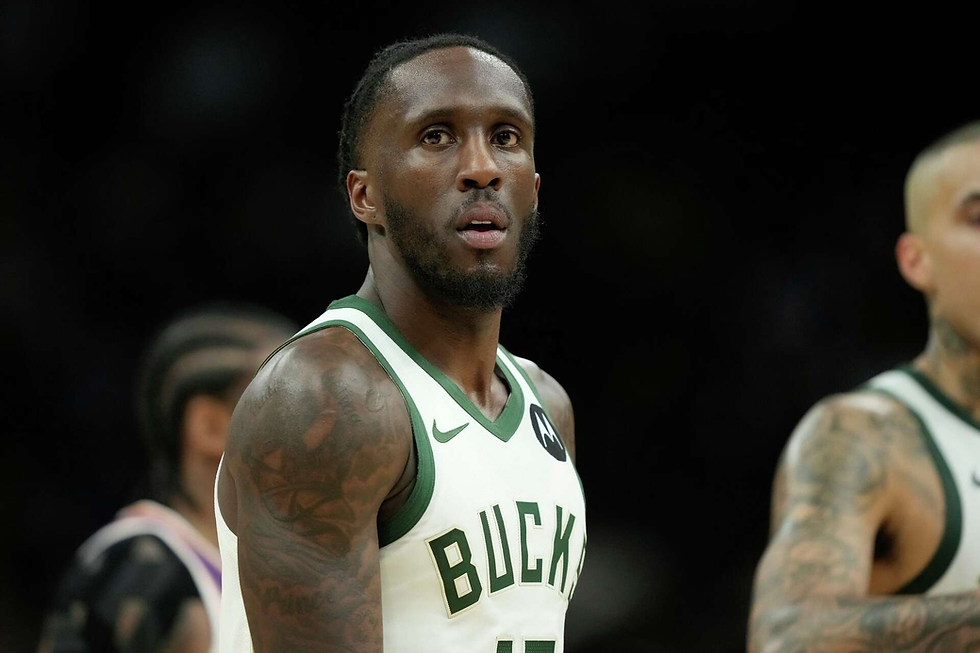
At 6'6" and 218 pounds, Taurean Prince has just about everything teams look for in a veteran role-playing wing. He has the size to defend multiple positions, can hold his own on the glass and, most importantly, has developed into a nightmare for defenses when left alone beyond the arc. Prince has become especially dangerous as a catch-and-shoot threat, shooting north of 40% from three in each of his last two seasons. He knocked down 43.9% of his triples in 2024-25 before following it up by shooting 43.6% last season, making him the type of floor spacer who can fit alongside virtually any lineup. Prince's versatility has helped him remain valuable despite constantly changing addresses. Detroit will become the seventh NBA franchise of his career, following stops in Atlanta, Brooklyn, Cleveland, Minnesota, Los Angeles and Milwaukee. He may never dominate the ball or put up star numbers, but that's exactly what has made him such a successful journeyman: Prince can walk into a new locker room, understand his assignment and immediately give his team something useful on both ends of the floor.
Landry Shamet

Every team needs a guy who can check in, find a corner and make the defense immediately regret leaving him open. For the New York Knicks, that guy was Landry Shamet. Now an NBA champion, Shamet has built his career around one of the most valuable skills in basketball: shooting. The 6-foot-5 guard connected on 39.2% of his threes during the regular season before catching fire in the playoffs, knocking down an incredible 47.5% from beyond the arc on New York’s championship run. To put it simply, Shamet's ability to stretch the floor has made him valuable everywhere he’s gone. Philadelphia, Los Angeles, Brooklyn, Phoenix, Washington and now New York have all found a use for his quick release and ability to score without dominating the basketball. He’s the definition of the “we need a three right now” guy. Need someone to drift into the corner, punish a late rotation and swing the momentum of a game with a couple quick triples? Shamet has made an eight-year career out of being exactly that guy—and now he has a championship ring to show for it.
Tim Hardaway Jr.

Tim Hardaway Jr. has built one of the longest careers in the league around a skill that never seems to go out of style: shooting. Armed with a quick trigger and a high release, Hardaway remains one of the NBA’s most dangerous streaky shooters well into his thirties. While many fans remember him most from his extended runs with the Knicks and Mavericks, THJ has become much more of a journeyman in recent years and his production has hardly disappeared along the way. He started all 77 games he played for Detroit in 2024-25 before transitioning into a sixth-man role with Denver last season, where he averaged 13.5 points and drilled 40.7% of his threes. Whether he’s starting, coming off the bench or being asked to provide instant offense, Hardaway has remained capable of changing a game with a handful of makes from beyond the arc. Hardaway Jr. just signed with the Miami Heat, the franchise where his father became an All-Star and eventually had his No. 10 jersey retired. More than a decade into his own career, THJ is still doing what has kept teams calling his number all these years: getting buckets and stretching the floor.
Taj Gibson

Taj Gibson is basically the blueprint for a journeyman veteran. He never needed to be a star to keep getting work—he built a 17-year career by being dependable, physical, professional and easy to trust. What makes him stand out is that teams know exactly what they’re getting. He’ll defend the paint, set hard screens, rebound, finish efficiently around the rim and give you real size inside. Even at 41, he’s lasted because his game was never built around speed or highlight plays in the first place. It was built around IQ, toughness and doing the dirty work at the four spot. The leadership piece matters too. Gibson has long had the reputation of being the kind of veteran who leads through preparation and example rather than constantly commanding the room. Younger players can look at him and see what an NBA professional is supposed to look like. And that’s really why he belongs on a list like this: 17 seasons, multiple franchises, constantly changing roles, and teams still keep deciding there’s value in having Taj Gibson around. That’s journeyman longevity at its best.
Andre Drummond
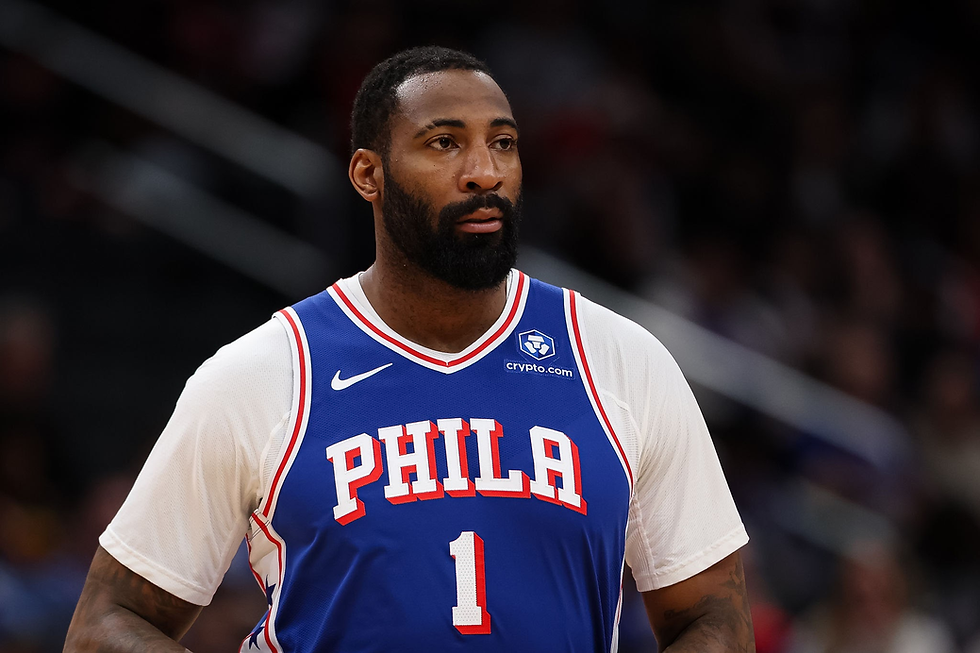
Andre Drummond may no longer be the All-Star who once terrorized teams on the glass, but very few backup centers can still impact a game quite like him. At his peak, Drummond was one of basketball’s premier rebounders, earning two All-Star selections while repeatedly leading the NBA in boards. Fourteen seasons later, that skill hasn’t gone anywhere. He remains a force on the glass, particularly when creating second-chance opportunities, and still provides teams with a massive interior presence as a screener, rebounder and finisher around the basket. And lately, Drummond has even started adding something nobody expected to his game: a three-point shot. After barely venturing beyond the arc for most of his career, he knocked down 32 triples at a respectable 35.6% clip last season. After stops with Detroit, Cleveland, Los Angeles, Philadelphia, Brooklyn and Chicago, Drummond is now headed to New York, signing with the reigning champion Knicks to provide size and rebounding behind their frontcourt. The star 23-year-old version of Andre Drummond may be gone, but if you need somebody to swallow up rebounds, create extra possessions and throw his weight around down low, the 14-year veteran can still do plenty of damage.
Kyle Anderson

Few players in the NBA have made an unorthodox style work quite like Kyle Anderson. The 6'8" forward owns one of the slowest and most recognizable releases in basketball, but shooting has never been what keeps him on the floor. Anderson is a legitimate point-forward capable of initiating offense, finding cutters, controlling the glass and scoring if needed. His game operates at an entirely different pace than the rest of the squad. Anderson rarely blows past defenders or overwhelms anyone athletically, yet his patience, basketball IQ and ability to see plays develop allow him to consistently make something happen. Put the ball in his hands and he can function as an oversized secondary playmaker; take it away and he can rebound, defend multiple positions and make the extra pass. “Slow-Mo” has remained useful through 12 NBA seasons and several different stops around the league. Now headed to Toronto, Anderson once again gives another team something difficult to find: a veteran forward who can essentially moonlight as a point guard.
DeAndre Jordan

Somehow, DeAndre Jordan is still going. The 38-year-old appeared in just 12 games last season, but New Orleans saw enough value in the veteran big man to bring him back for another year. That will extend an NBA career that began all the way back in 2008, with Jordan and Brook Lopez now standing as the only two players from that draft class still on an NBA roster. At his peak, we know the story. DJ was much more than a big body. He was an All-Star, a three-time All-NBA selection, a two-time rebounding champion and one of the most terrifying lob threats basketball has ever seen. Even today, he remains your favorite dunker’s favorite dunker—the kind of center who built an entire career around playing above the rim and finishing everything with force. His explosiveness obviously isn’t what it was during the Lob City era, but Jordan can still rebound, screen, finish around the basket and be a massive veteran when his number is called. He averaged 6.3 rebounds in just 16.6 minutes across his limited action last season while shooting 65.6% from the field. New Orleans represents the eighth franchise of Jordan’s career. And after 18 NBA seasons, more than 10,000 rebounds, a championship and enough poster dunks to fill a highlight reel by themselves, DJ still hasn’t been told to go home just yet.
Svi Mykhailiuk

Svi Mykhailiuk may have found his niche at exactly the right time. The 6'7" sharpshooter enjoyed arguably the best season of his career last year, averaging 9.4 points while shooting 47.8% from the field, 40.8% from three and 89.3% from the free-throw line. That's about as efficient as perimeter shooting gets. Mykhailiuk gave Utah a legitimate floor-spacing sniper who defenses couldn’t afford to lose track of. Give him a clean look on the perimeter and his quick release can make you pay, whether he’s spotting up in the corner, relocating along the arc or running into a transition three. And remarkably, the Jazz are already the eighth NBA team of his career despite Mykhailiuk still being just 29 years old. He's gone from Los Angeles to Detroit, Oklahoma City, Toronto, New York, Charlotte, Boston and Utah, continually finding another roster because elite shooting remains one of the easiest skills to plug into any lineup. Eight teams in eight seasons sounds like a lot, but he still has more left. Shooting better than 40% from deep while doing it is a pretty good way to make sure there’s always a ninth team willing to call.
Georges Niang (GSW)

Georges Niang has stayed in the NBA for more than a decade because he possesses one of the easiest skills to plug into any lineup: shooting. The 6'7" forward has hovered around 40% from three throughout his career, giving teams a dependable floor spacer who can punish defenses for helping too far off him. He doesn’t need the ball in his hands to make an impact, either. Niang can easily slide into either forward spot, space the floor, move the ball and knock down open looks when they come his way. His size also gives him enough physicality to battle on the glass and hold his own against bigger forwards. He may not overwhelm opponents with athleticism, but his shooting, positioning and feel for the game let him contribute without needing a major role. He brings energy, personality and experience to the locker room while remaining comfortable with a minor on-court role. Give him an open three, let him be himself, and he can make just about any rotation better.
The veteran's need love every now and then. The journeymen may not always get the most attention, but every contender needs supporters who know how to adapt, fill a role and contribute wherever they land. And most importantly, these are the player you'll miss when they call it quits. Which of these NBA players would you want suiting up for your favorite team? Who could still give your squad a boost, and who are you staying far away from? Let us know.

The NBA regular season is creeping closer as the summer wraps up 🚨 Can't keep up with the drama? Be sure to stay tuned into Sportz Nation for your sports updates on all things basketball.
Thanks for reading!
-Joel Piton
(@jpiton7)


Comments