
The Biggest NBA Draft Steals Since 2000


The NBA Draft is right around the corner, and following another MVP performance from Nikola Jokic, you have to wonder how important it really is to chase high picks when player development, smart scouting, and the right system can turn overlooked talent into the best player in the world. Jokic has set the blueprint for what a second rounder can do, but just how many great talents slid through the cracks on draft night because teams slept on them? Since 1947, every draft class has produced its share of bucket getters and disappointments, but you could build several championship teams with steals from the last 25 years alone. These are the hidden gems that made scouts look foolish and changed the trajectory of teams around the league.
Michael Redd
Round: 2 Pick: 13 (2000)

Career Stats:
19.0 PPG · 3.8 RPG · 2.1 APG · 44.7 FG%
Michael Redd’s journey from a second-round afterthought to Olympic gold medalist is one of the most fascinating player development arcs in history. At Ohio State, Redd was a volume scorer, but he wasn't considered an elite NBA-range shooter. Once in the league, he developed one of the quickest, most unblockable left-handed releases in the game. Being drafted by Milwaukee meant he was buried on the depth chart behind guys like Ray Allen and Glenn Robinson. Instead of folding, Redd leveled up his offensive package. When Allen was eventually traded to Seattle in 2003, Redd was perfectly positioned to step into the void. At his peak, he was one of the most dangerous scorers in the league, averaging 20+ points for six consecutive seasons.
Mehmet Okur
Round: 2 Pick: 9 (2001)

Career Stats:
13.5 PPG · 7.0 RPG · 1.7 APG · 45.8 FG%
A player ahead of his time, Mehmet became one of the league's pioneering stretch 5s, weaponizing the three-point shot as a big man years before it became a mandatory staple of modern offenses. The 2001 Draft was a watershed moment for standouts Tony Parker and Pau Gasol—international talent was welcomed, but not much was known about Okur. However, Mehmet made an immediate impact in Detroit, becoming the bench big they needed for a title as second rounder over No. 2 overall pick Darko Milicic. In Utah, Okur transitioned from a role player to a star with a textbook shooting stroke. In 2007, he was named a Western Conference All-Star becoming the first Turkish player in NBA history to earn the honor.
Round: 2 Pick: 2 (2001)

Career Stats:
20.7 PPG · 3.9 RPG · 5.3 APG · 42.1 FG%
A standout at Arizona, Gilbert Arenas reportedly only slid down in the draft due to his maturity. However, Arenas didn't just outplay his draft slot; he helped redefine the point guard position for the modern era. Arenas was one of the first players to prove that a point guard could be a primary, alpha-dog scorer. He weaponized deep three-point shooting before it was popular and spent his rookie year relentlessly outworking his teammates in Golden State, winning Most Improved Player in just his second season. At his peak in Washington (2004–2007), Arenas was a top-five scorer in the league, averaging 29.3 PPG in 2006. He made three consecutive All-Star games and three All-NBA teams, going toe-to-toe with legends like Kobe Bryant, LeBron and just about any player standing in his way.
Tony Parker
Round: 1 Pick: 28 (2001)

Career Stats:
15.5 PPG · 2.7 RPG · 5.6 APG · 49.1 FG%
Parker was the last pick of the first round, yet he went on to become a first-ballot Hall of Famer and a four-time NBA champion. Gregg Popovich famously stated that he hated Parker after his first pre-draft workout. Popovich described him as a "weenie" who was non-aggressive and afraid of contact. Parker proved Pop wrong almost immediately. Despite his lack of size, Parker became one of the most efficient interior scorers in NBA history. He perfected the teardrop and forced his way to the rim. For several seasons, he led the entire NBA in field goal percentage in the paint—a stat usually reserved for centers. His ability to change directions at full speed made him the engine of the Spurs' offense. Parker became the first European player to win Finals MVP and finished his career with 6 All-Star selections and 4 All-NBA honors.
Carlos Boozer
Round: 2 Pick: 6 (2002)

Career Stats:
16.2 PPG · 9.5 RPG · 2.2 APG · 52.1 FG%
While his teammates Jay Williams and Mike Dunleavy were top-five locks, Boozer fell into the second round before becoming a multi-time All-Star and Olympic Gold Medalist. Critics argued his efficiency at Duke was a by product of playing with elite playmakers. However, Boozer ended up finishing top 10 league-wide in field goal percentage multiple times. He wasn't a high-flyer or an elite rim protector. But he evolved into one of the most consistent offensive engines in the league by mastering the fundamentals that scouts ignored. Boozer developed a high-arching, unblockable jump shot that extended to 18–20 feet. This rainbow jumper turned him into an elite pick-and-roll partner in Utah with Deron Williams. Boozer was also ambidextrous and could finish with both hands. A two-time All-Star that earned All-NBA Third Team honors in 2008, Boozer finished his career with 14,000 points, 8,000 rebounds and was a key member of the 2008 "Redeem Team".
Mo Williams
Round: 2 Pick: 18 (2003)

Career Stats:
13.2 PPG · 2.8 RPG · 4.9 APG · 43.4 FG%
The legendary 2003 NBA Draft Class was stacked with talent, as we know, but there was no reason for Williams to fall this low. A high school All-American, and a standout at Alabama, Mo made every NBA team that passed on him regret it. Williams transformed himself into one of the most reliable three-point threats in the league. During his 2009 All-Star season, he shot a blistering 43.6% from deep and over 91% from the free-throw line. This floor-spacing became the perfect relief valve for LeBron James during their first stint together in Cleveland. He also proved you didn't need to be a pure passer to become effective. Williams excelled as a secondary creator who could punish defenses from mid-range or with his floater. He eventually brought his career full-circle after winning a chip with Cleveland in 2016.
Kyle Korver
Round: 2 Pick: 22 (2003)

Career Stats:
9.7 PPG · 3.0 RPG · 1.7 APG · 44.2 FG%
Korver has one of the best "diamond in the rough" stories. He became a draft steal not just by surviving, but by weaponizing a single elite skill—his shooting. Scouts viewed him as a one-dimensional three-point shooter who couldn't offer much else. But what happens when that skill becomes head and heels more complete than anyone else on your roster? Korver mastered the art of off-ball movement. Defenders were terrified to leave him which opened up the lane for the team's most gifted offensive player to dominate. Though he was never a lockdown defender, he overcame his athletic limitations through positioning and IQ. In 2014–15, he nearly became the first player to shoot 50% from the field, 50% from three, and 90% from the line for a full season. He finished the 2009-10 season with a 53.6% three-point average an NBA record that still stands.
Monta Ellis
Round: 2 Pick: 10 (2005)

Career Stats:
17.8 PPG · 3.5 RPG · 4.6 APG · 45.1 FG%
Ellis averaged 40 points per game in high school and was seemingly an NBA star in the making. Instead, Ellis was the victim of the rigid positional thinking. He was a shooting guard in a point guard’s body. He also suffered a knee injury in high-school that worried scouts further. However, Ellis became one of the most prolific undersized scorers in the mid to late 2000s. Ellis was arguably the fastest player in the NBA with the ball in his hands. He used this speed to become an elite finisher at the rim. In just his second season, Ellis won the NBA Most Improved Player award after jumping from 6.8 PPG as a rookie to 16.5 PPG, shooting a remarkable 47.5% from the field as well. At his peak in Golden State, Ellis was a top-tier offensive force, averaging 25.5 points, 5.3 assists, and 2.2 steals per game. For a four-year stretch, he was consistently one of the top five scorers in the NBA, regardless of draft pedigree.
David Lee
Round: 1 Pick: 30 (2005)

Career Stats:
13.5 PPG · 8.8 RPG · 2.2 APG · 53.5 FG%
Despite a standout collegiate career, Lee was the final pick in the first round. He was seen as too small and lacked the "long arms" to be a traditional rim-protecting center, yet he was perceived as too slow and "ground-bound" to defend modern NBA power forwards. However, Lee was an ambidextrous finisher who became one of the most elite and creative finishers at the rim in the league, regardless of which side of the hoop he was on. His vision and passing ability were rare for a big man, making him a foundational piece for the Warriors offense before the dynasty fully took flight. He became the first Knick since Patrick Ewing to record a 30-point, 20-rebound game. By the time he retired, he was a two-time All-Star and an NBA Champion, outproducing nearly all of the players taken ahead of him.
Lou Williams
Round: 2 Pick: 15 (2005)

Career Stats:
13.9 PPG · 2.2 RPG · 3.4 APG · 41.9 FG%
Lou Williams was a high school phenom who's draft night was named a "public humiliation" by Stephen A. Smith after falling so low. Scouts were already worried about tweeners who didn't go to college, so Lou being just 6'1" didn't help. He was also essentially a shooting guard in a point guard's body. However, Lou's size became his biggest strength. Instead of fighting to be a traditional starting point guard, Lou Will leaned into his identity as a bench assassin. He became the NBA's all-time leading scorer off the bench and tied Jamal Crawford for the most Sixth Man of the Year awards with three. Williams mastered the off-balance mid-range jumper and proved that an undersized guard could be the leading scorer for a playoff team without ever needing to start a game. While many first-rounders from 2005 were out of the league by 2012, Lou Williams played 17 seasons.
Rajon Rondo
Round: 1 Pick: 21 (2006)

Career Stats:
9.8 PPG · 4.5 RPG · 7.9 APG · 45.6 FG%
Rajon Rondo only dipped in the draft because he hadn't developed much of a jumpshot at Kentucky. But funnily enough, he managed to display a superstar NBA career without it by being so elite at everything else that the shooting didn't matter. While only 6'1", Rondo possessed a 6'9" wingspan and massive mitten-like hands, allowing him to palm the ball like a grapefruit and make legendary behind-the-back fake passes. Widely considered one of the smartest players to ever pick up a basketball, Rondo memorized other team's playbooks and ran the Celtics offense for nearly a decade. A two-time champion, four-time All-Star and three-time assist leader, Rondo proved that if your "Basketball IQ" is high enough, you can control the entire geometry of the court without ever needing a jumper.
Kyle Lowry
Round: 1 Pick: 24 (2006)

Career Stats:
13.8 PPG · 4.2 RPG · 6.0 APG · 42.3 FG%
At 6'0", Lowry was small even by 2006 point guard standards. More importantly, he couldn't shoot. In his final year at Villanova, he shot a dismal 27.3% from three. Scouts feared he would be a "non-threat" on the perimeter so he nearly fell out of the first round. However, Lowry made up for his lack of size with superb basketball IQ, and later developed into the G.R.O.A.T. (greatest Raptor of all time). Lowry is one of the rare players who became an elite shooter after entering the league. He went from a 25% shooter to a guy who could hit 200+ threes in a season at a 41% clip. He became the league’s gold standard for taking charges, diving for loose balls, and boxing out players much larger than himself. And the longevity? Insane. Most "undersized" guards fall off a cliff in their 30s. Lowry, however, made six consecutive All-Star teams starting at age 28. And somehow? He's still going.
Paul Millsap
Round: 2 Pick: 17 (2006)
Career Stats:
13.4 PPG · 7.1 RPG · 2.2 APG · 48.9 FG%
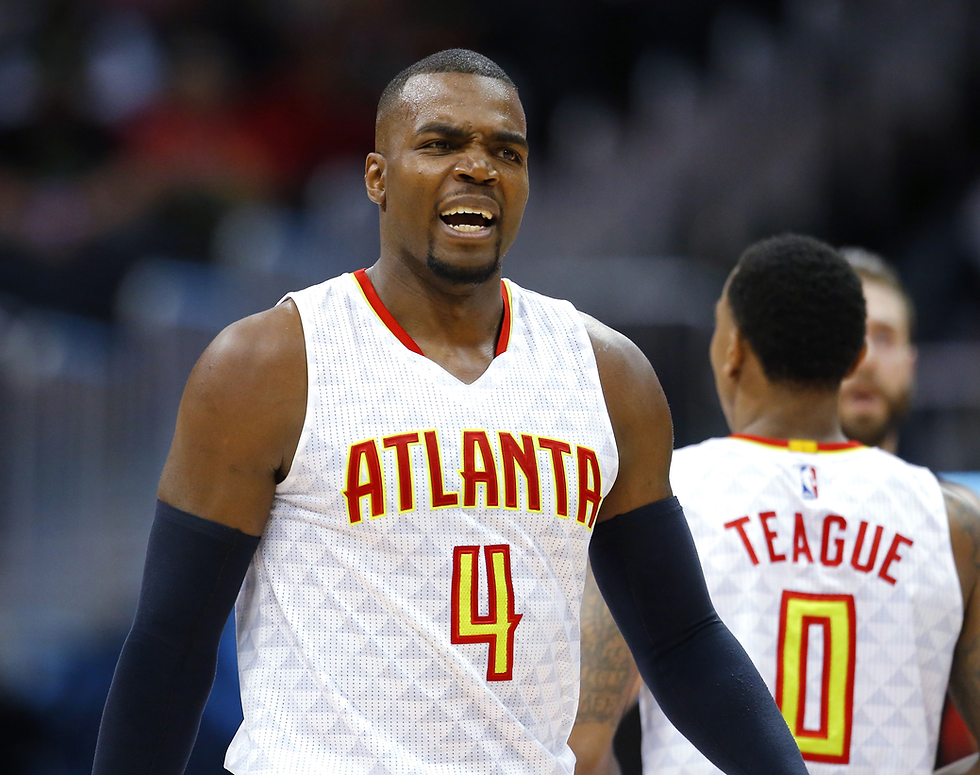
Paul falling to the 47th pick is one of the most glaring scouting oversights in the history of basketball. Millsap was considered too small to play the four-spot in an era that still featured bruising, 6'10" power forwards. His alma mater, Louisiana Tech, also wasn't superbly competitive. Somehow though, Millsap became one of the most versatile and skilled forwards in the game. Millsap is the only player in NCAA history to lead the nation in rebounding for three consecutive years. Because he did it a mid-major, it was looked at as a fluke. In the NBA, he immediately proved it was a skill, not a coincidence. While he lacked the verticality of an elite rim protector, he had active hands and became an All-NBA defender. When he moved to the Atlanta Hawks, he reached his final form. He became a four-time consecutive All-Star (2014–2017) and the defensive anchor for a 60-win team.
Marc Gasol
Round: 2 Pick: 18 (2007)

Career Stats:
14.0 PPG · 7.4 RPG · 3.4 APG · 48.1 FG%
3x All-Star and champion Marc Gasol's physical transformation and the training discipline behind is longevity make him a lock for the list. Several NBA teams missed the mark (no pun intended) on a standout prospect overshadowed by his older brother. Recognized as one of the best two-way centers of his generation, how did he do it? Marc returned to Spain after the draft for a year and changed his diet. By the time he debuted in Memphis, the "chubby" kid was gone, replaced by a 7'1", 255-pound immovable object. Scouts said he couldn't protect the rim because he couldn't jump. Gasol proved that if you are always in the right place, you don't need to jump. He used IQ and positioning to become an elite defensive weapon and the 2012-13 Defensive Player of the Year. He also developed a three point jumper later in his career that stretched defenses thin.
DeAndre Jordan
Round: 2 Pick: 5 (2008)

Career Stats:
8.5 PPG · 9.7 RPG · 1.4 BPG · 67.3 FG%
DeAndre Jordan is a prime example of a team successfully gambling on raw, unpolished physical tools and developing them into a beast. While the 2008 draft featured several big men taken in the lottery who quickly flamed out, Jordan emerged from the second round to become the greatest lob threat in basketball. Under head coach Doc Rivers, Jordan fully embraced the "stay in your role" mentality. Paired with Chris Paul and Blake Griffin, Jordan’s freakish vertical spacing became the foundation of the Clippers' high-flying offense. Defenses had to constantly account for his alley oop finishes, which opened up the perimeter for shooters. He routinely led the NBA in field goal percentage shooting over 70% from the floor because virtually all of his shots were dunks. Jordan blossomed into a 3-time All-NBA selection and 2-time All-Defensive First Team selection. He also won two NBA rebounding titles and added the ultimate veteran validation to his resume by winning a title with the Denver Nuggets in 2023.
Goran Dragic
Round: 2 Pick: 15 (2008)

Career Stats:
13.3 PPG · 3.0 RPG · 4.7 APG · 45.9 FG%
Despite playing professionally in Europe since he was a teenager, Dragic slipped deep into the second round because of a rather lean frame. However, he became the "Dragon" by weaponizing the drive and learning how to attack the basket despite his size. Dragic also spent his early years as the apprentice to Steve Nash, learning the nuances of the pick-and-roll, how to manipulate defenders with his eyes, and how to use his body to shield the ball. In the 2010 Playoffs, just his second season, he scored 23 points in a single quarter against Duncan's Spurs to help sweep them, signaling he was more than Steve's backup. Dragic became one of the most craftiest left-handed finishers in the league. In 2014, Dragic was named to the All-NBA Third Team and won Most Improved Player. To find an All-NBA player at pick No. 45 is a statistical miracle.
Hassan Whiteside
Round: 2 Pick: 3 (2010)

Career Stats:
12.6 PPG · 10.8 RPG · 2.2 BPG · 58.6 FG%
Whiteside's career has a different trajectory. He didn't outplay his draft position on day one. Instead, he was drafted 33rd overall in 2010, flamed out of the league entirely, and then returned years later to become a max-contract center and a defensive juggernaut. Whiteside's maturity was criticized coming out of Marshall and he played just 19 games over his first two season with Sacramento before getting cut. He then played in the G-League, Lebanon, and the Chinese NBL. During his time overseas, Whiteside added nearly 30 pounds of muscle. He stopped being a "skinny project" and became a physically imposing force that could no longer be bullied in the paint. When he finally got a second chance with the Miami Heat in 2014, he leaned into his frame completely. Hassan led the league in blocks twice, rebounds, and famously recorded a triple-double with blocks (12). How's that for immature?
Jimmy Butler
Round: 1 Pick: 30 (2011)

Career Stats:
18.4 PPG · 5.4 RPG · 4.4 APG · 47.4 FG%
Butler wasn't a blue-chip recruit; he was unranked in high school and started his collegiate career at junior college. His jumpshot was broken at Marquette, and scouts saw him as a safe pick at thirty with a low ceiling. Ultimately, Jimmy's steal status was cemented by a legendary work ethic. After three years of being a defender only, Butler famously isolated himself during the 2014 offseason—turning off his cable and internet to focus solely on training. He returned to average 20.0 PPG and won the NBA Most Improved Player award, proving he could be a primary scoring option. A Miami Heat Finals appearance and six All-Star appearances give Jimmy a fair shot at the Hall of Fame. In hindsight, the 2011 draft class was odd. Guys like Kawhi and Kyrie were taken fairly early but Butler has more win shares than anyone in his class.
Isaiah Thomas
Round: 2 Pick: 60 (2011)

Career Stats:
17.5 PPG · 2.4 RPG · 4.8 APG · 43.4 FG%
Isaiah Thomas being the 60th and final pick of the 2011 NBA Draft is widely considered the greatest "Mr. Unreliable" success story in sports history. Despite being a dominant force at the University of Washington, Thomas fell to the end of the draft likely due to his height. The draft was filled with guard talent already as well. But Thomas didn't just survive in the NBA. He became a short king who forced the league to rethink the value of smaller guards. During his peak with the Boston Celtics (2016–17), Thomas became the most feared clutch scorer in the league. He averaged 28.9 PPG, with a historic portion of those points coming in the final period. He proved scouts wrong about his finishing ability by perfecting the high-arching layup and using his body to shield the ball from rim protectors. Getting an All-Star at pick no. 60 is absurd.
Khris Middleton
Round: 2 Pick: 9 (2012)
Career Stats:
16.1 PPG · 4.7 RPG · 3.9 APG · 45.8 FG%
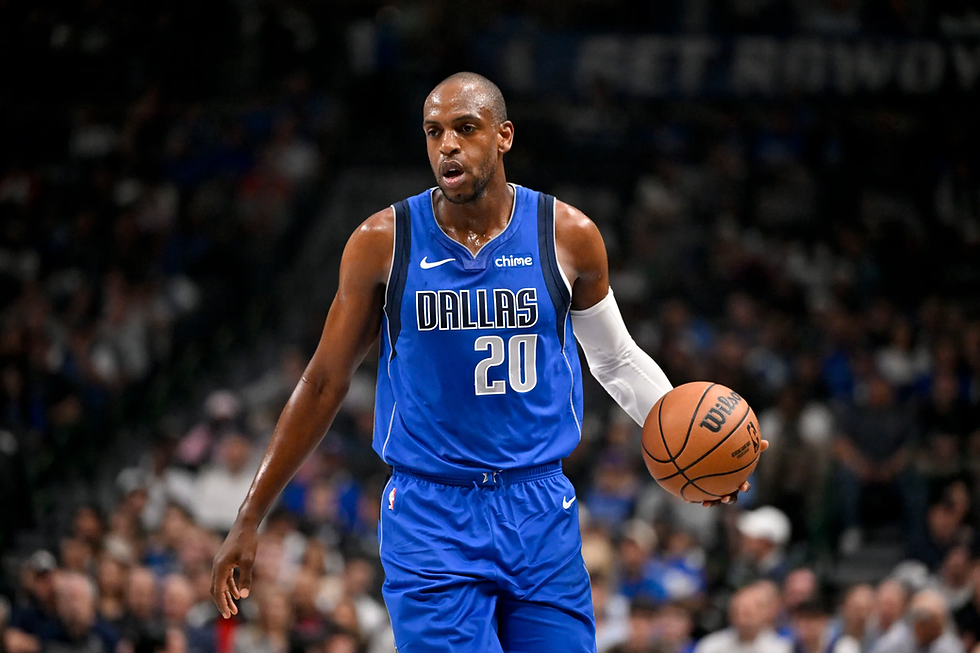
Middleton was actually a projected first-round pick—and even a potential lottery talent—after a breakout sophomore season at Texas A&M. However, a knee injury tanked his stock right before the draft and scouts weren't sure if he was a shooting guard or a small forward. However, Khris became the ultimate "Swiss Army Knife" and one of the most efficient two-way players in league history. While the league moved toward 3s and layups, Middleton perfected the lost art of the mid-range jumper. He became a nightmare to guard because he could shoot over defenders with his 6'7" frame. Traded to the Milwaukee Bucks in 2013, he quickly proved he was evolving into the "Robin" to Giannis Antetokounmpo’s "Batman." A three-time All-Star, Middleton led the Bucks to a title in 2021.
Draymond Green
Round: 2 Pick: 5 (2012)

Career Stats:
8.7 PPG · 6.8 RPG · 5.6 APG · 44.7 FG%
Draymond Green is arguably the most influential second-round pick in the history of the modern game. While the 34 players drafted ahead of him included stars like Anthony Davis and Damian Lillard, it also included numerous "traditional" big men who were out of the league within a few years while Draymond was busy redefining his position. Draymond turned his "positionless" weakness into the league's greatest strength. He proved he could guard all five positions—from elite point guards on the perimeter to bruising centers in the post. He redefined the role of a power forward. Instead of just setting screens, he became the primary facilitator for the Warriors' dynasty. His ability to grab a rebound and lead the fast break allowed Steph Curry and Klay Thompson to run off-ball, creating the "Death Lineup" that dominated the mid-2010s. The case for Draymond making the Hall of Fame is pretty high.
Rudy Gobert
Round: 1 Pick: 27 (2013)
Career Stats:
12.5 PPG · 11.7 RPG · 1.4 APG · 65.8 FG%
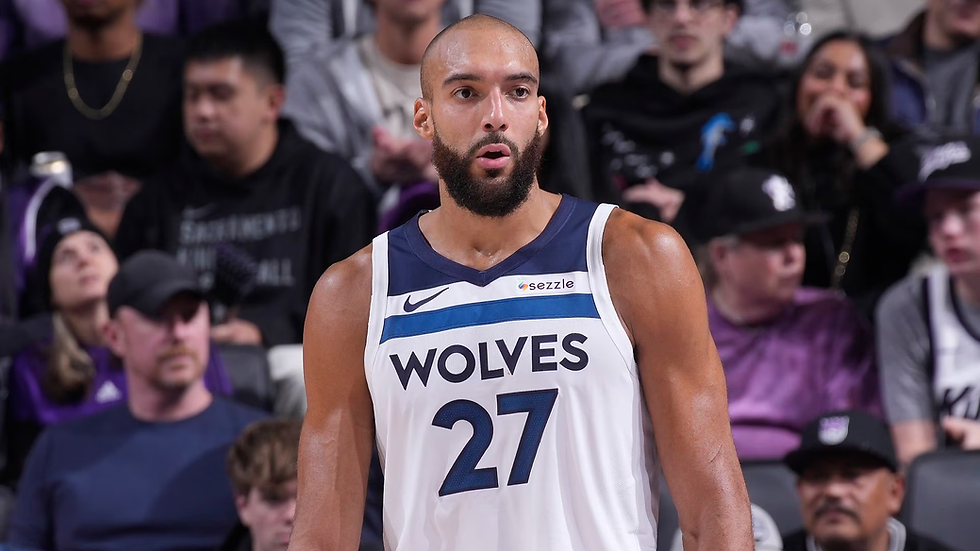
Considering the 2013 NBA Draft is one of the worst in history, Gobert falling to 27 is unacceptable. While teams were looking for versatile, modern athletes, they overlooked a 7'1" Frenchman who would go on to become the most dominant defensive force of his generation. Despite having seemingly no offensive bag, Gobert didn't change his game to fit the league; he forced the league to change its game to avoid him. The Stifle Tower turned the paint into a no-fly zone. He became the first player to truly weaponize "rim deterrence", the ability to stop a play without even touching the ball because players were too afraid to drive. He silenced critics by winning four Defensive Player of the Year awards (tying the all-time record held by Dikembe Mutombo and Ben Wallace). By 2026, he has amassed eight All-Defensive First Team selections, proving his longevity as a premier anchor.
Giannis Antetokounmpo
Round: 1 Pick: 15 (2013)

Career Stats:
24.1 PPG · 9.9 RPG · 5.0 APG · 55.4 FG%
The earliest pick on this list, Giannis Antetokounmpo being selected 15th overall is widely considered the greatest "swing for the fences" pick in league history. At the time, he was a total mystery—a skinny teenager playing in a second-tier Greek league. By 2026, he has become an inner-circle Hall of Famer, a two-time MVP, and a champion, making the 14 teams that passed on him look like they missed out on a generational phenomenon. This kid was still growing on draft night. He grew two more inches and through strength training added nearly 50 pounds of muscle. He went from a "twig" to one of the most physically imposing athletes in sports history. Giannis proved he could do anything. He can run the fast break like a guard, defend any position and has limitless energy above the rim. A ten-time All-Star, two-time MVP and champion, Giannis is the greatest Buck to ever do it, and one of the best to lace them up.
Jordan Clarkson
Round: 2 Pick: 16 (2014)
Career Stats:
15.3 PPG · 3.2 RPG · 2.8 APG · 43.7 FG%
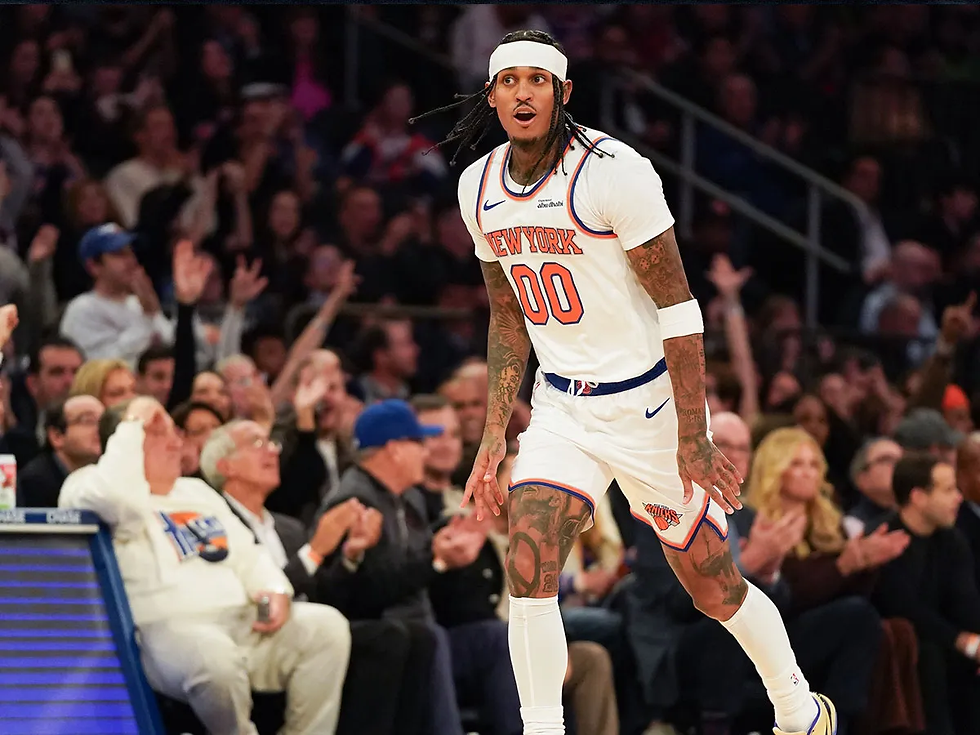
Jordan's evolution from second-rounder to certified flamethrower is inspirational. At Missouri, Clarkson was viewed as a combo guard. He didn't have the facilitation skills or court vision to be a traditional, pass-first point guard, but scouts feared he lacked the elite catch-and-shoot ability to play off the ball as a pure shooting guard. They were wrong. Clarkson leaned entirely into his greatest strength: his ability to get a bucket against anyone, at any time. He averaged 11.9 points and 3.5 assists per game and made All-Rookie First Team. Rather than fighting to be a permanent starter, Clarkson embraced the sixth man identity. While never a pure sharpshooter, he put in the work to become a respectable perimeter threat.
Nikola Jokic
Round: 2 Pick: 11 (2014)

Career Stats:
22.2 PPG · 11.1 RPG · 7.5 APG · 56.1 FG%
Nikola Jokic’s selection as the 41st overall pick in 2014 is arguably the greatest "draft heist" in sports history. His ascent from a second-round pick whose name wasn't even aired on TV (it famously happened during a Taco Bell commercial) to a three-time MVP and NBA Champion has completely rewritten the book on how NBA centers are evaluated. In 2014, Jokic was invisible. While he had incredible touch, he lacked every physical trait scouts typically look for in a typical big man. But Jokic didn't change his body to become a high-flyer; he changed the game to revolve around his genius. His basketball IQ became the ultimate equalizer. He became the greatest passing big man in history by using his vision to orchestrate the entire Denver offense from the high post. To compensate for his lack of speed, he perfected a soft touch and unconventional shots like the one-legged step back. A 3x MVP, Champion and triple-double nightmare, Jokic is making a case for the greatest big man ever.
Norman Powell
Round: 2 Pick: 16 (2015)

Career Stats:
14.0 PPG · 2.7 RPG · 1.6 APG · 47.1 FG%
Norman Powell’s journey took him from a late second-round pick to one of the NBA’s most efficient and feared scoring threats right now. Coming out of UCLA as a four-year senior, Powell was viewed as a "tweener"—a player whose physical tools didn't quite match his position. As a 22-year-old senior, many teams felt he had already reached his peak potential. Now, what if I told you the guy is still improving at 32 years old? Powell proved he could fill up the scoring charts in a hurry and guard multiple positions. He completely rewrote his shooting narrative and transitioned from a non-shooter to an elite marksman, consistently shooting over 40% from three-point range for multiple seasons. Named an All-Star last year in his early thirties, Powell has established himself as one of the most reliable "microwave" scorers in the league.
Malcolm Brogdon
Round: 2 Pick: 6 (2016)

Career Stats:
15.3 PPG · 4.1 RPG · 4.7 APG · 46.3 FG%
Selected 36th overall in the 2016 NBA Draft by the Milwaukee Bucks, Malcolm outperformed 35 players taken ahead of him to win the 2017 NBA Rookie of the Year award. One of just a handful of players to join the prestigious 50-40-90 club, Brogdon's efficiency throughout his short career was elite. Coming out of Virginia as a 23-year-old senior, he was viewed as a "safe" but low-upside prospect. In a re-draft, the guy doesn't go past number ten. Nicknamed "The President" for his maturity and leadership, he proved he could be a starting caliber point guard in Indiana, a championship-level role player in Milwaukee, and an elite bench plug. In 2023, he won Sixth Man of the Year, making him one of only two players (alongside Mike Miller) to win both ROY and 6MOY in a career.
Pascal Siakam
Round: 1 Pick: 27 (2016)

Career Stats:
18.5 PPG · 6.6 RPG · 3.6 APG · 49.7 FG%
Pascal Siakam’s evolution from an unknown, late-first-round pick to an NBA Champion and multi-time All-NBA player is one of the most remarkable development stories in basketball history. Coming out of New Mexico State as a 22-year-old sophomore, Pascal was viewed extremely raw because he didn't start playing basketball until late. Scouts also noted he had almost no perimeter game and shaky post moves. However, Siakam became the G-League's biggest success story, leading the Raptors 905 to a G League Championship. He then became the vital secondary scorer behind Kawhi Leonard during the Raptors' 2019 NBA Championship run. That same 2018-2019 season, he won the NBA's Most Improved Player award. In the years following, he became the face of the Raptors franchise, earning multiple All-Star appearances and two All-NBA selections. He led Indiana to another Finals appearance last year.
Jalen Brunson
Round: 2 Pick: 3 (2018)

Career Stats:
19.2 PPG · 3.2 RPG · 5.3 APG · 48.5 FG%
A standout at Villanova, Brunsons size was seen as his biggest flaw. Still, Brunson was named the national consensus college player of the year after winning a title his senior year and should've been the last player to be overlooked because of his age. Selected 33rd overall, Brunson has ascended from a projected backup point guard to an All-NBA superstar and the face of the New York Knicks franchise. Following solid play in Dallas, Brunson transformed into an MVP-caliber player, averaging well over 25 points and 6 assists per game while single-handedly carrying the Knicks deep into the playoffs. He proved that pump-fakes, pivots, deceleration, and elite footwork are just as unguardable as a 40-inch vertical. He became arguably the best player in the league at operating in the paint and the mid-range. At this point, Brunson has shattered his "backup point guard" ceiling by becoming a bona fide number-one option on a contending team, making All-Star and All-NBA teams in the process.
Desmond Bane
Round: 1 Pick: 30 (2020)

Career Stats:
19.3 PPG · 4.5 RPG · 3.8 APG · 47.5 FG%
You probably expected to see Tyrese Maxey here, but I think we knew Maxey would pan out the way he did. Bane, on the other hand, is the biggest steal from 2020. Selected 30th overall (the very last pick of the 1st round) in the 2020 NBA Draft by the Boston Celtics (and immediately traded to the Memphis Grizzlies), Bane turned one specific, highly publicized physical "flaw" into an afterthought. A pure sharpshooter who can destroy a team entirely from outside, Brunson was an immediate hit in Memphis and one of the league's best shooters from day one. And don't think the shooting is all he has in his bag. Instead of settling into a role as a catch-and-shoot guy, Bane relentlessly worked on his ball-handling. He started attacking closeouts, utilizing strong drives to the rim, and running pick-and-rolls. A 20+ point per game scorer in Orlando, the best might still be ahead.
History tells us that every NBA Draft has at least one player who slips too far. The hard part is figuring out who that player is before the rest of the league catches on. Looking back, some of these none of these steals felt obvious on draft day, these prospects were overlooked, waited their turn and proved us all wrong. So who will be next? Which player from the last few drafts—or even this year’s class—will eventually join this list?

The NBA's prestigious Draft Lottery airs Sunday, May 10th 🚨 Can't keep up with the drama? Be sure to stay tuned into Sportz Nation for your sports updates on all things basketball.
Thanks for reading!
-Joel Piton
(@jpiton7)


Comments