
Three Biggest Winners and Losers of the MLB Trade Deadline

By William Gilhooly
Sportz Nation - 8/4/2026

With the dust settling on the 2026 MLB trade deadline, the league’s contenders and pretenders have begun to separate.
Some teams pushed their chips to the middle, signaling they believe this is their year to make a championship run. Others looked toward the future, selling valuable pieces and reshaping their organizations for seasons to come.
From the blockbuster Connelly Early and Curtis Mead trade to the final moments before Monday’s 6 p.m. deadline, this year’s deadline was one of the most unpredictable and active in recent memory.
While dozens of moves reshaped rosters across baseball, a few teams stood above the rest, for better or worse.
Here are the three biggest winners and losers from the 2026 MLB trade deadline.
Winners
Los Angeles Dodgers

The Dodgers were already the World Series favorites heading into the deadline. However, after acquiring reigning back-to-back American League Cy Young Award winner Tarik Skubal, their odds improved from plus-175 to an astonishing plus-150.
The addition of Skubal provides much-needed pitching support while Blake Snell and Tyler Glasnow remain on the injured list. A rotation featuring Skubal, Yoshinobu Yamamoto, Snell, Glasnow, Justin Wrobleski and potentially Shohei Ohtani could become one of the most formidable staffs in league history.
Daulton Rushing has provided a spark at catcher while Will Smith recovers from a neck injury, but the Dodgers added even more depth by acquiring Ben Rortvedt from the Mets and Hunter Feduccia from the Rays. Those moves should help ease the workload on Rushing.
While critics often point to the Dodgers’ financial resources as the reason for their success, president of baseball operations Andrew Friedman has once again shown he is more than just a product of a large payroll.
Los Angeles Angels

For the first time in a while, the Angels appear to have a clear direction.
After years of hovering around the wild-card race and acquiring short-term additions that failed to produce, interim general manager John Mozeliak finally committed to a rebuild.
In exchange for Jose Soriano, Mozeliak acquired shortstop Arjun Nimala, the Blue Jays’ No. 2 prospect and the No. 43 prospect in all of baseball. Nimala is now Los Angeles’ top position prospect and could reach the majors early next season.
Mozeliak also addressed one of the organization’s biggest weaknesses at catcher by trading Jo Adell to the Cleveland Guardians for Double-A prospect Jacob Cozart. The Angels also acquired rookie Moises Ballesteros from the Chicago Cubs in exchange for Ryan Zeferjahn. Ballesteros, a former top-40 prospect, has struggled this season but has shown flashes of potential behind the plate.
Selling is never easy, but this is the type of move Angels fans have been waiting for. The organization finally appears willing to build for the future rather than chase short-term fixes.
Chicago Cubs
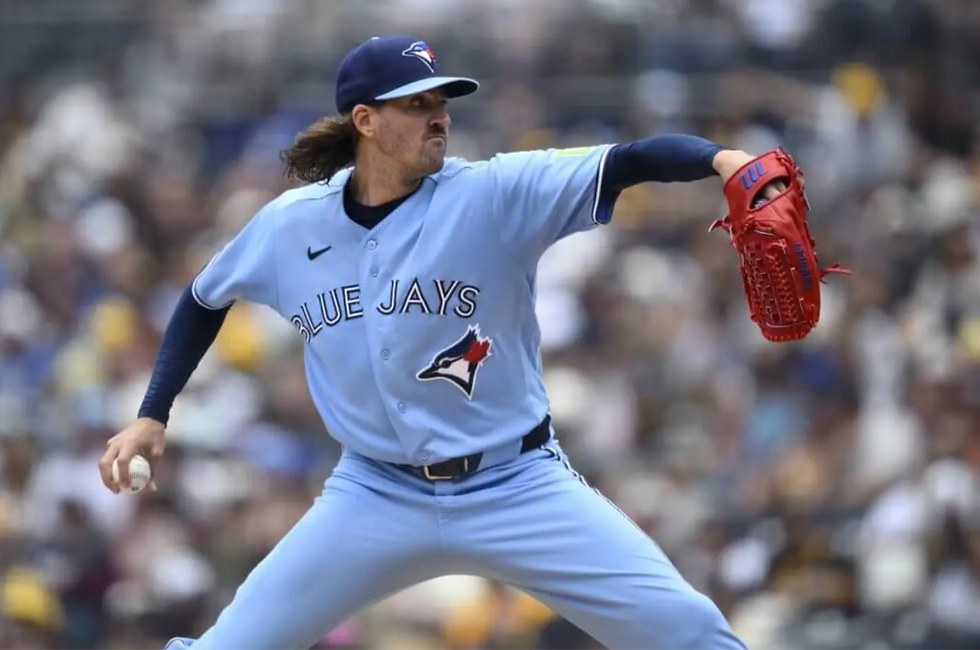
A week ago, the Cubs’ starting rotation consisted of Shota Imanaga, Matthew Boyd, David Peterson, Colin Rea and Javier Assad.
President of baseball operations Jed Hoyer saw that and completely overhauled the staff, adding two-time All-Stars Kevin Gausman and Clay Holmes, along with Braxton Garrett.
Gausman and Holmes bring much-needed postseason experience to a rotation that lacked it. Holmes, in particular, is a strong fit because of his ability to induce weak contact, especially with the best infield defense in baseball behind him.
With Ben Brown and Edward Cabrera on the injured list, these additions give Chicago more time to ensure its pitching staff is ready for October. They also provide flexibility to move some starters into the bullpen for the postseason and create a deeper pitching mix.
The Cubs also added reliever Ryan Zeferjahn for bullpen depth and outfielder Tyrone Taylor to address their lack of right-handed hitting.
Overall, Hoyer added more players than any other team at the deadline. Full-scale overhauls are rare, but in this case, the Cubs’ aggressive approach appears justified.
Losers
Milwaukee Brewers

The Brewers addressed some rotational concerns by acquiring Dustin May and Antonio Senzatela, but they failed to improve the area they needed most: their offense.
Milwaukee currently ranks last in baseball in home runs and added only one bat at the deadline in catcher Bo Naylor, who has hit just two home runs this season.
Jake Bauers is the only Brewers player with at least 20 home runs this season, while Brice Turang is the only other player with at least 15.
History has shown that postseason teams need balanced lineups capable of both reaching base and producing extra-base hits. Brewers president of baseball operations Matt Arnold failed to make a significant offensive addition last year, and that decision came back to hurt the team in October.
In a year where the Dodgers acquired one of the best pitchers in baseball and the Cubs, Phillies and Padres made significant upgrades, Milwaukee’s lack of aggression stands out.
Atlanta Braves

Entering the deadline, the Braves had one obvious weakness: starting pitching.
With Spencer Strider and A.J. Smith-Shawver not expected back until late in the season, and much of the rotation outside Chris Sale struggling, it appeared president of baseball operations Alex Anthopoulos would be aggressive.
He wasn’t.
Atlanta added outfielder Lane Thomas to address its positional needs but acquired only one starting pitcher in Tyler Mahle. The Braves also attempted to trade for former Cy Young Award winner Jacob deGrom, but he declined to waive his no-trade clause and remained in Texas.
Given the team’s rotation issues and mounting injuries, Atlanta could use more depth heading into October. The Braves are now relying heavily on inexperienced pitchers such as Bryce Elder, Spencer Schwellenbach and Reynaldo López to help lead a postseason run.
The pitching staff has improved as players have returned from injuries, and Atlanta’s five-game winning streak has helped ease concerns, but the lack of depth remains a question.
Texas Rangers

The deadline was always going to be complicated for the Rangers.
While the American League playoff race is more open than ever, Texas also struggled throughout July and entered the deadline on a six-game losing streak. Both buying and selling could have been justified.
Instead, president of baseball operations Chris Young did neither.
Texas’ only deadline moves were acquiring catcher Logan O’Hoppe, who was later designated for assignment, and pitcher Chase Silseth from the Angels, along with pitcher Adam Macko from the Blue Jays in exchange for Josh Smith.
While buying would have been difficult to justify given the team’s struggles, the weakness of the American League meant even minor additions could have pushed Texas back into the wild-card race.
The pitching staff has struggled, and additional rotation depth could have helped the Rangers return to contention. At the same time, veterans such as Corey Seager and Nathan Eovaldi could have brought back significant returns in a sell-off.
To Texas’ credit, the team did have a trade lined up to send Jacob deGrom to the Braves, but deGrom used his no-trade clause to block the deal.
For an organization searching for direction since winning the 2023 World Series, this deadline represented an opportunity to establish a clear path forward. Instead, the Rangers remained in place and will have to answer those questions in the offseason.
By Will Gilhooly


Comments