
Where Is Every 2014 McDonald’s All-American Today?


Before they were NBA stars, overseas standouts, journeymen, coaches, or names you might’ve completely forgotten, they were part of one of the most loaded high school basketball classes of the decade.
The 2014 McDonald’s All-American Game featured future NBA champions, All-Stars, lottery picks, and some of the biggest “what happened to him?” stories of the era. Guys like Karl-Anthony Towns, Devin Booker and more were all still teenagers, teaming up in a showcase that would set the stage before their careers took path.
More than a decade later? Some of these prospects are still dominating at the highest level imaginable. Others took their talents overseas, battled injuries, bounced around the league, or quietly stepped away from basketball altogether. So, 12 years later, it’s time to track down the entire class.
Where is every 2014 McDonald’s All-American today?
East
Cliff Alexander (F)

There was a point in time when Cliff Alexander looked destined to be basketball's next dominant big man. The 6'8" Chicago forward was an absolute terror at Curie High School, averaging roughly 25 points, 16 rebounds and six blocks as a senior while earning Naismith National Player of the Year honors. His matchups with fellow Chicago phenom Jahlil Okafor became standing room only, including Curie's legendary four-overtime victory over Okafor's Whitney Young squad. Alexander was overwhelming his opponents with quite a few things—strength, explosiveness, and a motor that made him look like a grown man playing against teenagers. Then almost everything that could derail his momentum did. Alexander arrived at Kansas as a top-five recruit but proved much rawer against college competition, averaging only 7.1 points, 5.3 rebounds and 1.3 blocks in 17.6 minutes per game. Just as his freshman season was reaching its most important stretch, an NCAA investigation into a loan reportedly taken out by his mother forced him to miss Kansas' final eight games.
Rather than return and fight for reinstatement, Alexander entered the 2015 NBA Draft. His stock had already fallen dramatically, and a sprained MCL during the pre-draft process didn't help. Once viewed as a potential lottery-level talent, Alexander went completely undrafted. Portland gave him his NBA opportunity, but it lasted just eight games and 36 total minutes during the 2015-16 season. He bounced through the D-League afterward before building a professional career overseas, including stops in Europe and, as recently as 2025, Al Ahli in FIBA's West Asia Super League. Alexander's story wasn't that a can't-miss prospect suddenly forgot how to play basketball. A series of unfortunate events immediately swallowed up a promising career.
Myles Turner (C)

Turner's rice to high school stardom was phenomenal. He went from roughly the No. 86 prospect as a junior, to No. 10, and eventually No. 2 in the entire 2014 class, behind only Jahlil Okafor. Unlike some of the others, Myles Turner was NOT considered an elite national prospect for his entire high-school career. After a massive growth spurt transformed him from a 6'2" eighth grader into a near 7-footer, Turner's stock skyrocketed during his final two years at Euless Trinity High School in Texas. And the appeal was obvious. Turner possessed tremendous length, soft hands and unusually good mobility for his size, but his calling card was already his ability to erase shots around the rim. As a senior, he averaged 18.1 points, 12.2 rebounds and an absurd 6.8 blocks per game. Scouts also saw touch on his turnaround jumper, flashes of perimeter shooting and passing ability that hinted at a much deeper game.
Turner still lacked polish, but unlike plenty of prospects whose weaknesses eventually overwhelmed their strengths, Turner's best high-school traits translated almost perfectly to the NBA. Indiana selected him 11th overall in 2015, and he developed into one of his generation's premier rim protectors while simultaneously stretching his range beyond the three-point line. Turner led the NBA in blocks per game in 2018-19 and 2020-21, including a career-best 3.4 per game during the latter season. He also helped the Pacers clinch an Eastern Conference title. Twelve years after the McDonald's game, Turner looks like one of this class's clearest scouting victories. He never became the dominant scorer that his size and shooting might have suggested, but that's almost beside the point: the teenager scouts envisioned as a potentially special shot blocker with intriguing perimeter touch eventually became exactly that at the highest level.
Tyus Jones (G)

Long before Tyus Jones became one of the NBA’s steadiest backup points, he was a Minnesota basketball legend. Jones played varsity at Apple Valley beginning in eighth grade and finished his career as the school’s all-time leader with 2,909 points and 1,031 assists, while helping the Eagles go 120-27 over the course of five years. As a senior, he averaged 25.6 points, 8.1 assists, 4.5 rebounds and 2.7 steals, shooting 58 percent from the field and 44 percent from three. He didn't have overwhelming size or athleticism. At roughly 6'1", he was considered an unusually mature floor general who controlled the ball well, manipulated defenses and consistently made the correct read. ESPN called him a “true point guard” who excelled operating ball screens, creating for teammates and finishing despite his size. He could score when necessary, but his greatest strength was understanding when not to. He made everyone around him better.
By the end of the recruiting cycle, ESPN ranked Jones as the No. 4 overall player and No. 1 point guard in the 2014 class. His biggest questions were the obvious ones: he wasn't tall or athletic, meaning his IQ would have to compensate against NBA athletes.
It did. Jones joined fellow McDonald's All-Americans Jahlil Okafor, Justise Winslow and Grayson Allen at Duke and immediately ran the show. He averaged 11.8 points and 5.6 assists, posted a Duke freshman-record 2.86 assist-to-turnover ratio and helped the Blue Devils win the 2015 national championship. Jones hasn't gone on to be a superstar, but he's lasted 11 seasons, becoming one of basketball's safest decision-makers with the ball. He led the NBA in assist-to-turnover ratio for six consecutive seasons from 2018 through 2024 and broke the league's single-season record multiple times.
Karl-Anthony Towns (C)

Karl-Anthony Towns was already doing things at St. Joseph High School in Metuchen, New Jersey that simply weren't normal for a guy his size. At roughly 6'11", Towns could protect the rim like a traditional center, score with either hand around the basket and then casually step outside and knock down jumpers. As a senior, he averaged 20.9 points, 13.4 rebounds and 6.2 blocks per game, shot 66.1 percent from the floor and 82.2 percent from the line, and led St. Joseph to a 30-2 record. What stands out looking back is just how modern his high-school game already was. Towns made 127 three-pointers over his final three high-school seasons, and this was back in 2013. He had soft touch, excellent hands and good passing instincts. But interestingly, he wasn't universally considered the best center in the class—ESPN ranked him No. 9 overall and third among centers, behind Jahlil Okafor and Myles Turner—but there may not have been another big man in the class with his combination of size and skill.
Playing on John Calipari's ridiculously deep 2014-15 team, Towns averaged 10.3 points, 6.7 rebounds and 2.3 blocks while shooting 56.6 percent, earning SEC Freshman of the Year honors and helping the Wildcats begin the season 38-0 before falling to Wisconsin in the Final Four. Minnesota made him the No. 1 pick in the 2015 NBA Draft, and this is one of those cases where the prospect actually became everything people imagined. Towns won Rookie of the Year, developed into a perennial 20-point scorer and gradually established himself as one of the greatest shooting big men the sport has seen. Through 11 NBA seasons, he's a career 39.7 percent three-point shooter, an extraordinary number for a seven-footer. Twelve years after appearing in the McDonald's gam, the resumé is enormous: six All-Star selections, three All-NBA selections, Rookie of the Year and now a 2026 NBA championship.
James Blackon Jr. (G)

James Blackmon Jr. was a bucket-getter, full stop. By his senior year at Marion High School, he was averaging 33.4 points per game and finished his prep career with 2,387 points, which put him among the top scorers in Indiana high-school history. His scouting report was pretty straightforward: high-level shooter, natural scorer, compact release, legitimate deep range and a knack for creating his own offense. Blackmon could score off movement, pull up, attack closeouts and completely swing a game. Even as a teenager, his jumpshot was described as textbook and well ahead of guards his age. The problem was that scouts also saw the issue that would eventually follow him to the pros: at roughly 6'3" he was small for an NBA shooting guard but didn’t have the playmaking chops of a point guard. At Indiana, the scoring was there. He averaged 15.7 points as a freshman, then 15.8 as a sophomore and a career-best 17.0 points while shooting 42.3 percent from three as a junior. Across his three seasons, he shot 41.5 percent from deep. The talent was never really the question.
What hurt him most was the combination of size, defense, no playmaking and injuries. Going into the 2017 draft, NBA teams were openly trying to determine whether Blackmon could handle enough to play point guard and whether he could defend NBA guards. He wasn’t an explosive athlete, wasn’t especially long for his position and averaged fewer than two assists per game in college. Two knee surgeries at Indiana also did nothing to help his athletic profile. In other words, teams basically had to ask if his shooting so elite that they can live with all the negatives. They ultimately decided not to use a draft pick to find out. Blackmon went undrafted in 2017, signed with Philadelphia for training camp and later played in the G League, but never appeared in a regular-season NBA game. He instead carved out a strong international career in countries like Italy and Turkey. And he's still playing in 2026.
D'Angelo Russell (G)

Before “DLoading” became one of the NBA’s most recognizable guards, D’Angelo Russell was the silky-smooth lefty running alongside an absolutely loaded Montverde Academy team that featured the likes of Ben Simmons. Russell wasn’t considered quite the same caliber of high-school prospect as Cliff Alexander or Tyus Jones—ESPN ultimately ranked him No. 13 nationally in the 2014 class—but his game had appeal. At 6'4" with excellent size, Russell could knock down jumpers from well beyond the arc, operate with a floater in the lane and see passes that other scoring guards simply didn’t. ESPN’s scouting report described a sweet-shooting lefty with deep range who could punish defenses both as a scorer and facilitator. His senior year was actually interrupted by knee surgery, but Russell still averaged 19.3 points, 4.7 assists and 3.6 rebounds and helped Montverde finish 24-0 and capture the 2014 national tournament championship. Then Ohio State changed everything. Russell exploded from highly regarded McDonald’s All-American to potential NBA franchise prospect almost immediately, averaging 19.3 points, 5.7 rebounds and 5.0 assists while shooting 41.1 percent from three as a freshman.
The Lakers ultimately selected him second overall in 2015, and Russell never quite became the perennial superstar that comes with being selected that high, but the criticism he receives can really obscure a very successful NBA career. His peak came in Brooklyn, where he averaged 21.1 points and 7.0 assists in 2018-19, led the Nets back to the playoffs and earned his first All-Star selection at just 22 years old. The following season, split between Golden State and Minnesota, he raised his scoring average again to 23.1 points per game. For a stretch, Russell looked exactly like the prototype teams were chasing in the mid-2010s: a big, crafty lead guard who could bomb threes, dissect pick-and-roll coverage and create shots. But was Russell was never an explosive downhill athlete and never developed into an impactful defender despite his length. His game was also heavily dependent on difficult jumpers, and when those weren't falling, the lack of defense became much harder to overlook. As of right now, he's a free agent, but I think he'll find a new squad.
Justin Jackson (F)

Seven NBA teams, 280 regular-season games, a first-round selection, and an NBA championship ring: yet, not many hoops fans even know who Justin Jackson is. The more interesting part is that his path to high school stardom was pretty unusual. Justin Jackson didn't ball out at some top tier high school in his hometown of Houston. He was homeschooled and played for the Homeschool Christian Youth Association, where the lanky forward became one of the most prolific scorers in the country. Jackson averaged a ridiculous 31.5 points and 9.1 rebounds as a senior, after previously leading HCYA to a championship in 2012. By 2014, he was a five-star recruit and one of the top ten players in his class. Jackson's high-school calling card was his scoring versatility. Despite standing 6'8", he had grown up playing more like a perimeter player, giving him a smooth jumper and making him a guy who prioritized offense over everything. Scouts loved his shooting ability, length, feel for finding openings and soft stroke. In the McDonald's game, Jackson proved he belonged by pouring in a game high 23 points on 11-of-14 shooting, sharing MVP honors with Jahlil Okafor despite his team losing.
Jackson committed to North Carolina and played three season, gradually progressing from talented role player to consensus First-Team All-American as a junior. In 2016-17 he averaged 18.3 points and helped UNC win the 2017 national championship one year after the Tar Heels had lost the title game to Villanova. He was then selected 15th overall in the 2017 NBA Draft, with Portland immediately dealing his rights to Sacramento. Then the NBA exposed essentially the same limitations scouts had always wondered about. Jackson was long and skilled, but he lacked the burst to consistently create separation off the dribble and never became strong enough to overpower defenders. That meant his NBA value was going to depend heavily on becoming a sniper. Unfortunately, Jackson made only 31.9 percent of his career NBA threes. His sneaky good floater and off-ball movement remained useful, but without elite creation, defense or consistent three-point shooting, it became difficult for him to lock down a permanent starting role. His final NBA appearances came on a 10-day deal with Minnesota in 2024.
Melo Trimble (G)

Romelo “Melo” Trimble became a household name around the Washington, D.C. basketball scene at Bishop O’Connell, and he worked for it. Early in high school, Trimble was viewed primarily as a Lou Williams type of player. After his sophomore season, he began transitioning toward point guard, forcing himself to become more comfortable creating for teammates and becoming a vocal leader rather than simply hunting his own shot. By the end of that transformation, he had developed into one of the most accomplished guards in the area, and the scoring ability was serious. Trimble averaged 20.8 points per game as a junior, helping O’Connell finish 30-7, and as a senior, he bumped that figure to 23.1 points per game, including a ridiculous school-record 47-point performance against Gonzaga. He earned Washington Post All-Met Player of the Year honors and became Maryland's first McDonald’s All-American signee in more than a decade. Trimble could spot up, pull up, attack the lane and finish, and he had enough handle to create his own offense.
Then he got to Maryland and immediately looked like somebody who might eventually make the NBA. As a freshman, Trimble averaged 16.2 points, 3.9 rebounds and 3.0 assists, shot 41.2 percent from three and 86.3 percent from the line, and became one of the best freshmen in college basketball. That first season ultimately represented the peak of his NBA draft stock. Trimble stayed three years in College Park, finishing with 1,658 points and averages of 15.9 points and 3.9 assists across 104 starts. But the jump shot that had made him such an intriguing prospect became less reliable. After shooting 41.2 percent from three as a freshman, he fell to roughly 31 percent in each of his final two seasons. At 6'3", Trimble wasn't big, explosive or quick by NBA standards. He was a scoring-minded combo guard, but wasn't viewed as an elite NBA-level distributor, and his defense also drew criticism. He went undrafted after declaring his junior season. But even without making the NBA, Trimble became a bona fide star overseas.
Isaiah Whitehead (G)

Few NBA players have represented their hometown quite like Isaiah Whitehead. The Coney Island native starred at Abraham Lincoln High School, the same Brooklyn basketball factory that produced Stephon Marbury, Sebastian Telfair and Lance Stephenson. Whitehead carried enormous expectations as the next great Lincoln guard and delivered, averaging 23.5 points, 6.7 rebounds and 5.3 assists as a senior while earning Mr. New York Basketball honors. At 6'4" he was a physical, explosive scoring guard who could bully smaller defenders on drives, absorb contact and heat up from well beyond the three-point line. However, the drawbacks were also visible early—questionable shot selection, an occasionally loose handle and uncertainty over whether he was truly a point guard or an undersized shooting guard. Whitehead stayed close to home for college, committing to Seton Hall, and his sophomore season became one of the program’s best campaigns. After transitioning more fully to point guard, he averaged 18.2 points, 5.1 assists and 3.6 rebounds, earned unanimous First-Team All-Big East honors. Whitehead averaged 23.3 points during the 2016 Big East Tournament and scored 26 in the championship game against Villanova, skyrocketing his draft stock.
Then the story became even more Brooklyn. Utah selected Whitehead 42nd overall in the 2016 NBA Draft, but the Nets traded for his rights on draft night, making him the first Brooklyn native to play for the franchise since its move to the borough. As Whitehead himself described it at the time, playing for the Nets was a “dream come true.” He had a solid season as a rookie, appearing in 73 games with 26 starts and averaging 7.4 points, 2.6 assists and 2.5 rebounds. His NBA stay proved short, however. Whitehead’s game sat in an awkward middle ground at the highest level. He had excellent strength and good size for a point guard, but he lacked elite burst, could be inefficient inside the arc and remained turnover-prone. After only 16 games during his second Nets season, Brooklyn traded him to Denver, which waived him, and a later two-way stint with Detroit did not produce another regular-season NBA appearance. His NBA career ended at 89 games, all with Brooklyn. He continued playing professionally for years overseas, with stops including Russia, Turkey, Germany, Poland and Israel before retiring just a few days ago.
Theo Pinson (F)

At Wesleyan Christian Academy, Pinson was the guy coaches dream about having because he could do everything. He was a 6'5"/6'6" wing with length, athleticism, handles and playmaking instincts. His coach Keith Gatlin described him as somebody who could play point guard, shooting guard or forward depending on what the team needed. Pinson averaged 23 points per game as a senior and helped Wesleyan win back-to-back NCISAA 3A state championships in 2013 and 2014. Contemporary scouting praised his ability to attack the rim, rebound, defend multiple positions and especially pass at an elite level for a wing. ESPN saw a confident scorer with a strong mid-range game and the ability to get downhill against almost anybody. He wasn’t projected as a pure scorer. He was projected as this versatile, athletic connective piece who could grab a rebound, push the break himself, create for teammates and defend wings.
North Carolina showed both why scouts loved him and why his ceiling eventually flattened. Injuries immediately interrupted his development: he fractured the fifth metatarsal in his left foot as a freshman, missing 14 games, then fractured the same bone in his right foot before his junior season and missed more time. Roy Williams still described him as Carolina’s energy guy, best passer, versatile defender and someone who could play four positions. When healthy, Pinson became an extremely useful college player rather than a star. He started on North Carolina’s 2017 national championship team, and by his senior year he averaged 10.3 points, 6.5 rebounds and 5.1 assists, becoming the first Tar Heel ever to average at least 10 points, five rebounds and five assists in a season. But the jumper never came. Pinson shot just 25.7% from three across four years at North Carolina which is beyond brutal for a perimeter player trying to survive in the modern NBA. He went undrafted in 2018 and still managed to carve out five NBA seasons and 127 games with Brooklyn, New York and Dallas. But the stats are ugly, Pinson finished his NBA career at 26.1% from three and 32.0% overall and averaged just 2.7 points. Pinson seemingly has retired for the second time after a brief stint in Puerto Rico.
Justise Winslow (F)

Justise Winslow's story was near picture perfect. Before Duke, Winslow was an absolute force at St. John's School in Houston. A four-year varsity starter, the 6'6" forward could overwhelm high-school opponents physically while filling virtually every column of the box score. As a senior, Winslow averaged an outrageous 27.5 points, 13.6 rebounds, 3.5 assists, 2.1 blocks and 1.8 steals per game, leading St. John's to the Southwest Preparatory Conference championship. The scouting appeal wasn't hard to see. Winslow was strong, explosive, relentless in transition and an exceptional rebounder for a wing. He could defend guards, wings and bigger forwards, create offense in the open court and attack the basket through contact. When Duke announced its recruiting class, Mike Krzyzewski described him as a player who could “guard every position” while praising his rebounding and scoring. The question was always the perimeter shot. Winslow's strength and athleticism allowed him to dominate teenagers without needing to be an elite shooter, but NBA teams needed evidence that defenders wouldn't simply sag off him.
Ironically, his lone season at Duke seemed to answer that concern: Winslow shot 41.8 percent from three while averaging 12.6 points and 6.5 rebounds. But his 64.1-percent free-throw shooting was a warning that the three-point percentage might not be completely sustainable. Winslow seemingly became better as the stakes got higher. During Duke's six-game NCAA Tournament run, he averaged 14.3 points and 9.3 rebounds, shot better than 50 percent from the field and hit 8 of 14 threes as the Blue Devils won the 2015 national championship. Miami selected him 10th overall in the 2015 Draft, and then went on to have an encouraging rookie season. Winslow spent five seasons in Miami, overcoming injuries and acting as an all-around standout defensive wing. But a 31% three point percentage made him almost unplayable. Suffice to stay, the jump shooting did NOT translate from Duke to the NBA. Following his stint in Portland in 2023, Winslow hasn't been on an NBA team.
Kevon Looney (F)

If you only know Kevon Looney from Golden State, his high-school tape is almost jarring. At Alexander Hamilton High School in Milwaukee, Looney wasn’t some lumbering interior big. He was a 6'9" point forward. Hamilton often let him initiate offense because he was not only its tallest player, but also one of the best ballhandlers and passers. As a senior, he averaged an absurd 27.9 points, 12.7 rebounds, 8.0 blocks and 7.0 assists per game, while shooting 60 percent from the floor and 43 percent from three. He finished with 2,122 career points and ESPN ranked him as the No. 3 power forward in the 2014 class, but there were people who viewed him more like an oversized wing. He could rebound, grab the ball and lead the break himself, attack from the perimeter, make plays for teammates and score inside. Even when he committed to UCLA, Looney specifically talked about being used at both forward spots, playing on the wing and handling the ball in a role somewhat reminiscent of Kyle Anderson.
The intriguing part is that UCLA gave us a glimpse of an NBA player who ultimately never really existed. Looney averaged 11.6 points and 9.2 rebounds, led all freshmen nationally with 15 double-doubles and shot 41.5 percent from three, the best mark on the Bruins. Scouts saw a face-up, rebounding four who could snipe threes, defend and playmaker if necessary. That is NOT the Kevon Looney NBA fans know today. Due to questions about his frame, he slid all the way to No. 30 in the 2015 Draft, and then his career nearly got derailed before it started: Looney underwent surgery for a torn labrum in his right hip before his rookie season and later had surgery on the left hip as well. He played just five games as a rookie. But rather than trying to be the perimeter-oriented scorer scouts once imagined, Looney completely reinvented himself. He became stronger, accepted a low-usage role and built his career around center duties. Golden State kept him for 10 seasons, and he became a three-time NBA champion in 2017, 2018 and 2022. During the 2022 title run, he played all 82 regular-season games plus all 22 playoff games, then led the entire postseason with 63 offensive rebounds. Following a difficult situation in New Orleans, Looney is looking for a fresh opportunity with the Los Angeles Lakers.
West
Jahlil Okafor (C)

Jahlil Okafor wasn't just a highly ranked recruit. He was viewed as the future of the center position and the safest superstar big-man prospect in America. By his sophomore year at Whitney Young, he was already averaging 24.8 points and 12.6 rebounds, and by graduation he was the consensus No. 1 player in the 2014 class across all major publications: ESPN, Rivals, Scout and 247Sports. As a senior, he led Whitney Young to the Illinois Class 4A championship and swept major national Player of the Year honors. He also took home MVP honors at the McDonald’s All-American Game. And what was he supposed to become? Basically, a franchise offense unto himself from the low block. Okafor had enormous hands, a wide frame, absurd touch around the basket and footwork that was considered almost unheard of for a teenager. He could seal defenders deep, feel where contact was coming from, spin either direction, finish with either hand and punish single coverage. NBA draft coverage called him perhaps the most advanced low-post scoring prospect to enter the league in years. Flip Saunders even said he had the best post footwork he’d seen from a prospect since Tim Duncan. The consensus is that had he had been drafted 20 years earlier, Okafor might have had a completely different turn out.
At Duke, Okafor averaged 17.3 points and 8.5 rebounds while shooting 66.4 percent, became the first freshman ever to win ACC Player of the Year, and was subsequently drafted third overall by Philadelphia. Then came the cruel timing. Okafor entered the NBA at almost the exact moment the center position was being rewritten. Teams increasingly wanted bigs who could protect the rim, defend pick-and-rolls in space, switch onto guards, sprint the floor and shoot threes. Jahlil was brilliant with his back to the basket, but didn't shoot outside the paint, struggled at the free-throw line, wasn't especially quick laterally and wasn't a naturally impactful defensive rebounder or rim protector. His rookie season was beyond solid. Okafor averaged 17.5 points and 7.0 rebounds, shot 50.8 percent and made First-Team All-Rookie. For a 20-year-old center, those are serious numbers. But Philadelphia went 10-72, and his defense remained a problem. His season also ended early because of a torn meniscus in his right knee. Then Joel Embiid finally got healthy, and the rest was history. Philadelphia suddenly had Embiid, Okafor, former No. 1 overall prospect Nerlens Noel, and soon Ben Simmons and Markelle Fultz. Amid all this young talent, Philadelphia’s roster increasingly became built around Embiid as its franchise leader, all but pushing Okafor away. Following stints in Brooklyn, New Orleans and Detroit, Okafor struggled with injuries and never really sustained the prowess he showed his rookie season.
Emmanuel Mudiay (G)
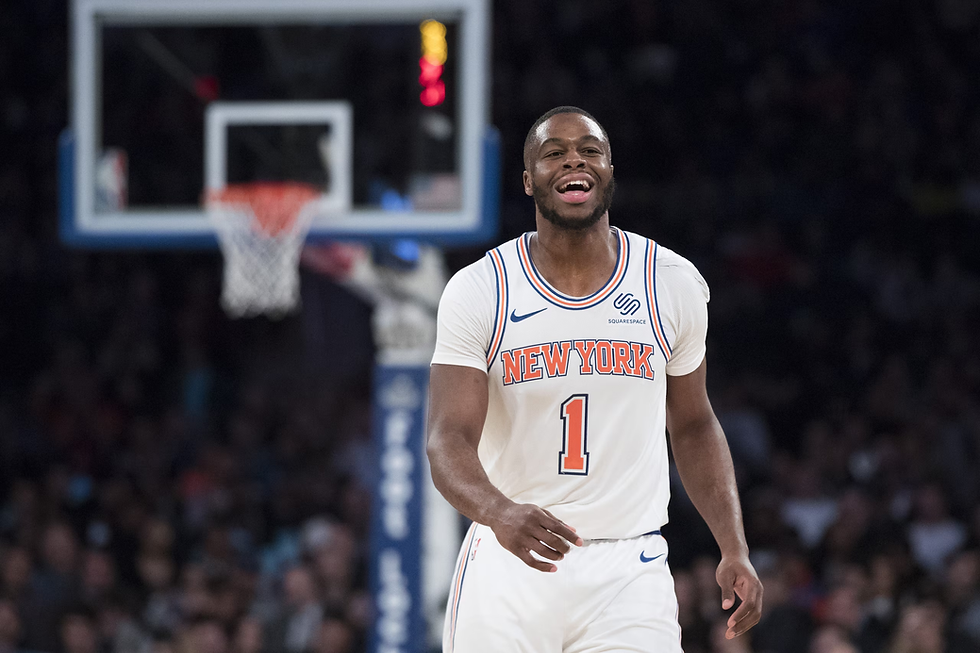
Mudiay was absolutely one of those guys in high school. By the end of the 2014 cycle, ESPN had the 6'5" guard No. 5 nationally and No. 2 among point guards behind Tyus Jones. At Prime Prep in Dallas, Mudiay looked like the prototype for where NBA point guards were headed. He had a big, strong frame, excellent speed, long strides and the ability to overpower smaller guards on the way to the rim. DraftExpress was already raving about his size and physical development when he was just a 15 years old, while also praising his willingness to make the extra pass. As a senior, he averaged roughly 16 points, 6 rebounds and 4 assists, helping Prime Prep win 30 games. The appeal wasn't merely that he was tall for a point guard. He could rebound and immediately push the ball himself, collapse defenses in transition, shield defenders with his body and fire passes to shooters. There were visible weaknesses however. His jumper was streaky, his handle could get loose, he played too fast at times and his decision-making wasn't always perfect. Then Mudiay took one of the most unusual routes of anyone in this game. He initially committed to SMU over many other programs including Kentucky and Kansas. But instead of ever playing college basketball, he signed a one-year, $1.2 million contract with the Guangdong Southern Tigers in China.
Mudiay and his family publicly emphasized his desire to financially help his mother, while contemporary reporting also documented uncertainty surrounding NCAA eligibility because of Prime Prep's academic situation. And the teenager actually held his own against professionals. In 10 CBA regular-season games, Mudiay averaged roughly 17.7 points, 6.0 rebounds and 5.9 assists. Denver selected him seventh overall in 2015, and this is where Mudiay's story becomes a little frustrating, because the exact flaws scouts worried about became the things that prevented the dream from fully materializing. NBA defenses exposed the jumper and decision-making much more ruthlessly. Across six NBA seasons, Mudiay shot 40.1 percent from the field and 32.3 percent from three, while turnovers were a persistent problem wherever he was asked to run significant offense. His best season came in 2018-19 with New York, where he averaged 15 points for a Knicks team that won just 17 games. His last stint in the NBA was in 2022 at just 26 years old, and he's currently playing in Puerto Rico.
Stanley Johnson (F)

Stanley Johnson was a monster at Mater Dei and one of the most decorated high-school players in California history. Over four seasons, Mater Dei went 135-7, and Johnson became the first player in California’s top division to win four consecutive state championships. As a senior, he averaged about 25 points, eight rebounds and 3.5 assists, led Mater Dei to a perfect 35-0 season, and was named MaxPreps National Player of the Yea. And Mater Dei used him for everything: he played inside early in his career, moved to the wing, and by his senior year was even handling the ball like a point-guard. He could grab a rebound and push in transition, bully smaller wings, defend multiple positions and create enough off the bounce to look like a future point-forward. ESPN ranked him the No. 7 player overall and No. 1 small forward in the 2014 class. Arizona only added to the hype. Johnson averaged 13.8 points, 6.5 rebounds and 1.5 steals as a freshman, shot 37.1 percent from three, and reached the Elite Eight. By draft night, Johnson looked like a powerful two-way wing with an NBA body and enough skill to become much more.
Detroit took him eighth overall in 2015. With a seven-foot wingspan, Detroit envisioned him guarding star wings immediately while the offense developed. The problem was hidden in plain sight, though. Johnson had dominated high school largely through bully-ball. He was bigger, stronger and more physically mature than almost everybody guarding him. Once he reached the NBA, those advantages shrank dramatically. Suddenly the opposition was just as strong, often longer and frequently more explosive. Then the jumper never became the weapon Detroit needed it to be. That 37-percent season at Arizona created optimism, but Johnson ultimately shot just 30.5 percent from three and 39.1 percent from the field across his NBA career. Once teams realized they could sag off him, the rest of his offensive game got squeezed. He wasn't shifty enough to consistently beat defenders off the dribble, wasn't an elite passer who could run an offense, and couldn't punish defenses enough as a shooter, with a field goal percentage below 40% for his career. Following promising defensive campaigns in Detroit, Johnson became an offensive liability on just about every team he suited up with, most recently the Spurs in 2023.
Trey Lyles (F)

At Arsenal Tech, Trey Lyles wasn't viewed as merely a future stretch-four role player. He was a 6'10" offensive centerpiece with the tools to score both inside and out, ranked by ESPN as the No. 6 overall player and No. 2 power forward in the 2014 class.
As a senior, Lyles averaged 23.7 points, 12.9 rebounds and 3.5 assists, leading Arsenal Tech to a 27-2 record and the school's first boys basketball state championship. ESPN described him as an advanced post scorer who was comfortable facing the basket, shooting to about 17 feet and putting the ball on the floor against slower big men. He had good hands, footwork, touch and passing instincts, and John Calipari specifically praised his ability to score both inside and outside. Kentucky was a weird environment for him because of how deep that 2014-15 squad was. With Karl-Anthony Towns, Willie Cauley-Stein and Dakari Johnson occupying the frontcourt, Calipari frequently played Lyles at small forward, despite his natural position being power forward. He averaged only 8.7 points and 5.2 rebounds in 23 minutes, but started 21 games for a team that opened the season 38-0. NBA evaluators essentially had to project what he'd look like once he returned to his natural position.
And there was a legitimate debate over what he would be. Scouts saw a tall player who could handle, pass, score in the post, face up and eventually stretch the floor. The concerns were that he wasn't especially explosive, wasn't much of a rim protector and didn't possess one truly dominant skill. Utah took him 12th overall in 2015, and ultimately, that prediction was pretty accurate. Lyles never became a star, but he became the useful modern frontcourt player scouts thought he could be: enough size to play the four or small-ball five, enough shooting to drag defenders away from the basket, and enough skill to attack a closeout or make a secondary pass. Across 10 NBA seasons and 650 games, he's averaged 7.6 points and 4.3 rebounds while shooting 34.7 percent from three. He's played for multiple teams and repeatedly finds his way into the rotation. And his story just got another chapter. After spending 2025-26 with Real Madrid, where he helped them reach the EuroLeague championship game, Lyles returned to the NBA this summer by signing with Minnesota.
Kelly Oubre Jr. (F)

Kelly Oubre Jr. arrived at Kansas as one of the most physically wings the program had ever seen. After averaging 22.7 points per game as a junior at George Bush High School in Texas, Oubre transferred to powerhouse Findlay Prep in Nevada for his senior season, where he averaged roughly 23 points per game. ESPN ultimately ranked the 6-foot-7 lefty No. 11 nationally and No. 4 among small forwards, behind Stanley Johnson, Justin Jackson and Theo Pinson. Oubre had outstanding length, quickness and explosiveness, eventually measuring with a wingspan of 7-foot-2+. He could fly in transition, finish above the rim, crash the offensive glass and use those long arms to disrupt passing lanes. The lefty stroke was there, but not nearly as refined as it is now. Oubre loved letting threes fly, sometimes a little too much. Contemporary evaluations praised his shooting mechanics and confidence but questioned his consistency; he shot only about 31 percent from three during Nike EYBL play. He also wasn't yet an advanced ballhandler, wasn't particularly comfortable going right and could put his head down and drive directly into traffic. Kansas would prove to be his biggest test. Oubre barely played during the opening weeks because Bill Self wasn't satisfied with his defense. Eventually, his effort caught up with his talent. He worked his way into the starting lineup, averaged 9.3 points and 5.0 rebounds, shot 35.8 percent from three and became one of Kansas’ better perimeter defenders.
His performance was enough for Washington to trade for Oubre after Atlanta selected him 15th overall in the 2015 NBA Draft, and the NBA career that followed has largely validated the original scouting report. Oubre never became the Kawhi Leonard-style two-way superstar that represented the dream outcome, but he developed into a legitimate NBA bucket getter: an athletic slasher, energetic cutter, transition threat and streaky left-handed shooter capable of getting extremely hot. His limitations have remained recognizable too—periods where the jumper dictates too much of his effectiveness. But zooming out, Oubre unquestionably became one of the better members of this class. He turned the raw tools scouts saw at Findlay Prep into a long NBA career and multiple seasons around or above 19 points per game. As of now, he's loading up his next chapter in Indiana.
Rashad Vaughn (F)

Rashad Vaughn looked like exactly the kind of guard Milwaukee would eventually want next to Giannis: 6-foot-6, strong frame, confident jumper, natural scorer and deep NBA range. At Findlay Prep, Vaughn averaged 19.9 points, 4.9 assists, 4.5 rebounds and 2.2 steals as a senior and was regarded as one of the best shooting guards in the 2014 class. ESPN ultimately ranked him No. 19 overall and the No. 4 shooting guard in the nation. His calling card was scoring. Vaughn could rise into pull-up jumpers, shoot comfortably from NBA-type range and create enough space off the dribble to manufacture difficult shots. At 210 pounds, he also had much better size than the average teen scoring guard. But there was already a catch: he wasn't much more than a shot maker. He wasn't a particularly explosive first-step athlete, could settle for contested jumpers, and didn't consistently create easy opportunities for teammates. UNLV seemingly confirmed the upside. As an 18-year-old freshman, Vaughn averaged 17.8 points and 4.8 rebounds while shooting 43.9 percent overall and 38.3 percent from three. He scored 20-plus nine times and 30-plus twice in only 23 games.
Milwaukee took him 17th overall in 2015, despite Vaughn being the second-youngest player in the entire draft. The idea made plenty of sense: develop this big young scorer into a floor-spacing guard alongside Giannis and Khris Middleton. Even years later, Orlando coach Frank Vogel looked at Vaughn's mechanics and remarked that he had a “great looking shot.” The problem was that the shots didn't go in. Vaughn shot 30.5 percent from the field and 29.3 percent from three as a rookie. And unlike a player who can survive poor shooting through defense, passing or rim pressure, Vaughn didn't have another elite NBA skill to fall back on. He wasn't a point guard, didn't get to the basket often enough, wasn't an impactful rebounder and never established himself as a defender. Across three NBA seasons, Vaughn played 139 games but averaged only 3.0 points while shooting 33.7 percent from the field and 31.3 percent from three. By 21, the former first-round pick was gone. He's currently playing overseas in Indonesia.
Joel Berry II (G)

Joel Berry II was seemingly a born-winner. At Lake Highland Prep in Florida, the 6-foot guard averaged 24.5 points, 7.0 rebounds, 4.3 assists and 2.4 steals as a senior, won two state championships and became the first player ever to win Florida Mr. Basketball three times. He wasn't tall or overwhelmingly athletic, but he was quick, tough, competitive and already carried himself like an on-court coach. At UNC, Berry developed into an excellent shot-maker, strong on-ball defender and one of the biggest-game performers of his era. He finished his UNC career with 1,813 points, 451 assists and 266 three-pointers, won the 2016 ACC Tournament MVP and then became the 2017 Final Four Most Outstanding Player, scoring 22 points in the national championship victory over Gonzaga.
So why wasn't the NBA interested? Mostly because Berry was 6-foot tall with roughly a 6-foot-3 wingspan, and he wasn't an elite enough athlete or playmaker to overcome it. NBA scouts liked his shooting, toughness, IQ and competitiveness, but he was insanely undersized for either backcourt position. He also wasn't a pass-first point guard—Berry was at his best looking for his own offense. By the time he entered the 2018 draft, he was already 23, so teams also saw less developmental upside than with younger prospects. Berry went undrafted but joined the Lakers' Summer League team, signed an NBA contract and appeared in three preseason games before being waived. He then had two G-League stints with South Bay and Greensboro. Unfortunately, the jumper he needed to separate himself never became dominant there either: across 55 G League games he averaged 9.1 points and 2.4 assists while shooting only 30 percent from three. In general, Berry was good at almost everything.
At his size, the NBA needed him to be great at something.
Reid Travis (F)
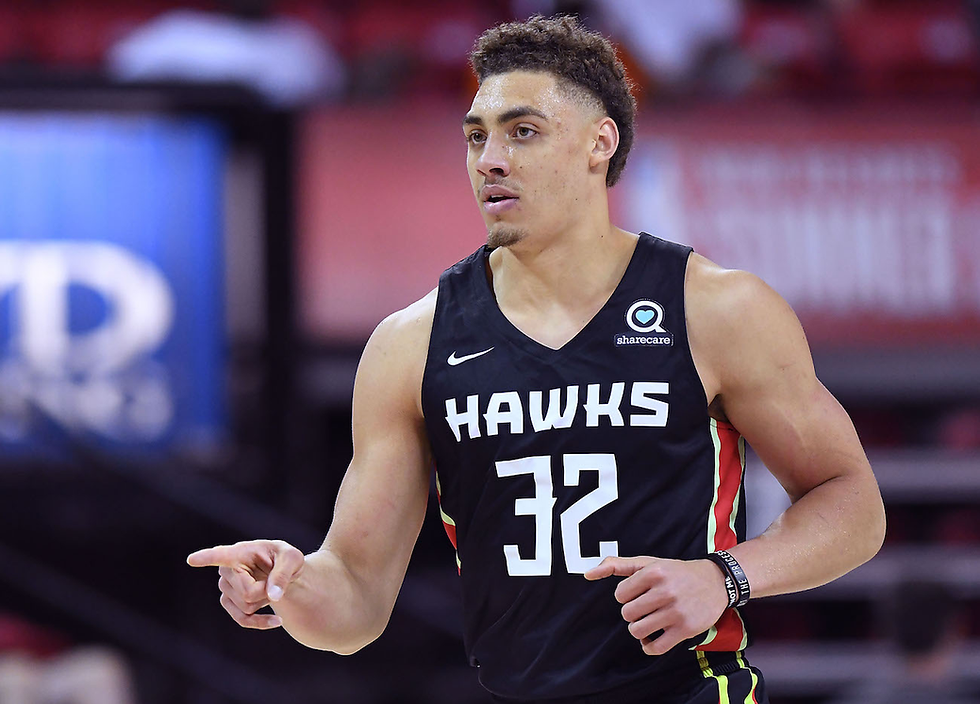
Reid Travis was yet another absurdly talented prospect out of Minnesota alongside Tyus Jones and Rashad Vaughn. At De La Salle High School in Minneapolis, the 6'8", 240-pound forward averaged 26.1 points and 9 rebounds as a senior, carrying the Islanders to their third consecutive Class 3A state championship. And the scouting report was all about power and motor. Travis was an outstanding rebounder, had smooth low-post footwork and could finish through contact with a frame that already looked college-ready. Before focusing exclusively on basketball, Travis had played football for three years—and you could see the physicality in the way he attacked the opposition. He chose Stanford over schools including Minnesota and Duke and eventually became a very productive Pac-12 player. After injuries interrupted his first couple seasons, Travis averaged 17.4 points and 8.9 rebounds in 2016-17, then 19.5 and 8.7 the following year. He later graduate-transferred to Kentucky, where his role shrank, but he still contributed 11.2 points and 7.2 rebounds to an Elite Eight team.
The problem was that Travis became caught between basketball eras. At 6'8", he was undersized to live as an NBA center, but he didn't have the perimeter shooting or versatility teams demanded from power forwards. Scouts loved his strength and post scoring but questioned his jumper, team defense and positional fit. By the time he entered the 2019 draft, he was also already 23 years old, leaving less room for teams to project major development. Travis went undrafted and never reached the NBA regular season, but like several players in this class, that doesn't mean basketball didn't work out. He's built a long professional career across Germany, Japan, the G League and Taiwan.
Tyler Ulis (G)

Tyler Ulis was tiny even by high-school standards, but at Marian Catholic in Chicago Heights, he was proved size could be overcome with heart. He arrived at Marian at roughly 5'3" and 115 pounds, started varsity as a freshman and gradually turned himself into one of the best guards in Illinois. By his senior year, Ulis averaged 23.0 points, 6.8 assists and 3.7 rebounds, finishing as Marian Catholic’s all-time leader in points, assists and steals. The scouting report was consistent: elite handle, elite basketball IQ, excellent passer, terrific pick-and-roll feel, strong leadership—but extremely small. Ulis could change speeds, split defenders, use hesitations and crossovers to get into the lane and seemingly stay one play ahead of everybody. But how much of that could survive against NBA length and strength? Kentucky answered that question. As a sophomore, Ulis averaged 17.3 points and 7.0 assists, won SEC Player of the Year and Defensive Player of the Year and captured the Bob Cousy Award as the nation's top point guard.
Phoenix took him 34th overall in 2016, with Suns GM Ryan McDonough admitting that Ulis would have gone much higher if he were taller. And honestly, the fact that he carved out a real NBA role at all is impressive. Ulis played 133 NBA games, started 58 of them and averaged 7.5 points and 4.0 assists for his career. But the same issues everyone was worried about from the beginning eventually caught up with him. Ulis shot only 40.3 percent from the field and 28.0 percent from three in the NBA. At his size, merely being a decent playmaker wasn't enough. He needed either elite shooting, elite rim finishing or elite defense to offset being the smallest player on the floor most nights. Instead, bigger guards could shoot over him easily and his small stature made finishing around the basket difficult offensively. Injuries from a young age made things even worse. Where is he now? Ulis has stepped into a full-time coaching role at the University of Arkansas.
Grayson Allen (G)

Before Grayson Allen became one of basketball’s most polarizing players, he was a star blue-chip prospect at Providence School in Jacksonville. The 6'4" guard averaged 22.8 points, 6.7 rebounds, 4.2 assists and 1.7 steals as a senior, after leading Providence to a 35-1 record and Florida Class 3A state championship as a junior. ESPN ranked him No. 21 nationally and the No. 6 shooting guard in the 2014 class. And he wasn't just a standstill shooter. Allen was an explosive athlete with serious bounce, enough to win the McDonald’s All-American dunk contest. His scouting report praised his confidence from three, natural perimeter shooting and his ability to transition between scorer and passer. His Duke career started quietly because that freshman class was ridiculous—Jahlil Okafor, Tyus Jones and Justise Winslow were "next up" ahead of him. Despite leading Duke to a title with a standout performance in the national championship game, Allen averaged only 4.4 points as a freshman. From there, he blossomed into one of the country's best guards, eventually becoming an All-American and 2,000-point scorer at Duke.
Utah selected him 21st overall in 2018, and after stops with Memphis and Milwaukee, Allen became one of the league's most dangerous floor spacers. His peak shooting season came in Phoenix in 2023-24, when he led the NBA at 46.1% from three. He's also proven capable of attacking hard closeouts, making secondary plays, and playing above the rim when need be. He never became the star scorer his best Duke stretches hinted at, but the two things that jumped out when he was 18, shooting and athleticism, translated beautifully. After a few productive years in Phoenix, Allen was traded to Charlotte this summer, entering another chapter at age 30.
Devin Booker (G)

Devin Booker was a walking bucket at Moss Point. After spending his freshman year in Michigan, Booker moved to Mississippi to live with his father, former NBA pro Melvin Booker, and absolutely took off. Over three seasons at Moss Point, Devin scored 2,518 points to become the school's all-time leading scorer, culminating in a senior year in which he averaged 30.9 points per game despite seeing double and triple-teams at every opportunity. Booker wasn't an overwhelming athlete who blew past teenagers. His father had drilled into him that because he wasn't exceptionally fast or explosive, he needed to win with footwork and basketball IQ. Booker progressed the silky jumper, pump fakes, hesitations and midrange touch that would eventually define his NBA game. He joined perhaps the deepest team in college basketball, where John Calipari essentially ran platoons loaded with future professionals. Booker consequently played only 21.5 minutes per game, averaging 10.0 points rather than putting up the monster numbers you'd see at the NBA level.
Booker was drafted No. 13 overall as the youngest player in the NBA, and seemingly the best shooter in the draft. Pre-draft evaluators questioned his first step, athletic explosiveness and handle and often projected him primarily some "catch-and-shoot" guy. But training camp workouts reportedly exposed elite ballhandling, intelligence and shot-creation ability that Kentucky's didn't really allow him to display. And then the Suns gave him the basketball. What followed completely blew past even optimistic projections. Booker became a five-time All-Star by 2026, an All-NBA First Team selection, an NBA Finals participant and Phoenix's franchise player. His 70-point game in Boston at age 20 is still one of the most absurd scoring performances in basketball history, and somehow, he still feels underrated.
Thomas Welsh (C)

Welsh’s rise at Loyola High School in Los Angeles was almost accidental. As a freshman, he was still learning how to move after a massive growth spurt and came off the bench for the freshman team. As a sophomore, he was a reserve on varsity. He didn’t become a major player until his junior season, by which point he had grown to seven feet. UCLA later described him as someone who had to basically relearn coordination after shooting up from 6'6" to 7'0" in the blink of an eye. Once his body caught up, the improvement was dramatic. As a senior he averaged 15.3 points, 11.2 rebounds and 2.7 blocks, shot 59 percent and led Loyola to a 27-4 record. He became Mission League Player of the Year and went from a relatively anonymous big to a McDonald’s All-American overnight. he scouting report was pretty traditional at first: excellent size, soft hands, high basketball IQ, strong rebounding instincts and good touch around the basket. He wasn’t an explosive athlete, though, and even at seven feet he wasn't viewed as a dominant rim protector.
Welsh committed to UCLA, and he didn't shoot threes for his first three college seasons. He attempted exactly one three-pointer before his senior year—and made it. Then, seemingly out of nowhere, he expanded all the way beyond the arc and hit 40.2 percent on 112 attempts as a senior while averaging 12.6 points and 10.8 rebounds. Denver took him 58th overall in 2018, and he landed in probably the best possible classroom for a skilled center: backing up Nikola Jokić. Unfortunately, Welsh’s limitations were exactly the kind the NBA was becoming less forgiving toward. He was an average athlete, struggled guarding quicker players, wasn't an elite rim protector, and despite the promising senior-year shooting, he was still fundamentally a traditional center. If a big can't switch, protect the rim at a high level or create major offensive advantages, there are only so many roster spots available. Welsh appeared in only 11 NBA games, all for Denver in 2018-19, averaging 1.6 points in just over three minutes per game. As of 2026, he's continuing an overseas career in Taiwan.
_ _ _ _ _ _ _ _ _ _ _ _ _
Some of these players ended up exactly where you though they would. Some were out of the league before they were old enough to rent a car. There's one common theme here—the inability to accurately predict anyone's story.
So now it’s your turn—who from this class surprised you the most? And which player became exactly who you hoped he would be back in 2014? Drop your picks below, and let us know which McDonald’s All-American class we should revisit next.
For more in the series, click here

NBA Media Day has concluded, which means it's time for hoops again 🚨 Can't keep up with the hype? Be sure to stay tuned into Sportz Nation for your sports updates on all things basketball.
Thanks for reading!
-Joel Piton
(@jp7ton)


Comments